Nuclear Fuel Cycle and Reactor Terminology
The nuclear fuel cycle covers the preparation, use, and disposal of nuclear fuel, along with the key reactor components and safety terms used in operation.
The Front-End of the Nuclear Fuel Cycle
The front-end of the nuclear fuel cycle includes all the preparation steps required to produce usable fuel for a reactor. These processes transform natural uranium ore into fuel assemblies ready for electricity generation.
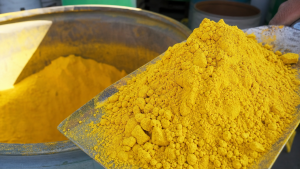
- Yellowcake: A solid, coarse powder obtained during milling of uranium ore. It consists mainly of uranium oxides, especially triuranium octoxide (U3O8). It is insoluble in water and is the standard form of uranium traded internationally.
- Conversion: Yellowcake is purified and chemically converted into uranium hexafluoride (UF6), a gaseous form needed for isotope separation.
- Enrichment: Natural uranium contains only 0.7% fissile Uranium-235 (U-235) and 99.3% non-fissile Uranium-238 (U-238). Enrichment increases the concentration of U-235.
- Low-Enriched Uranium (LEU): Uranium with a U-235 concentration between 3% and 5%. Most commercial nuclear power plants use LEU.
- Highly Enriched Uranium (HEU): Uranium with a U-235 concentration of 20% or greater. It is used in research reactors, naval propulsion systems, and nuclear weapons.
- Separative Work Unit (SWU): The standard unit used to measure the effort required to enrich uranium.
- Fuel Fabrication: Enriched UF6 is converted into uranium dioxide (UO2) powder, pressed into ceramic pellets, loaded into metal tubes, and grouped into fuel assemblies.
Reactor Core Components and Their Functions
A nuclear reactor core is the central region where nuclear fission occurs. Specific materials and engineering components manage the fission process to produce heat safely.
- Moderator: Slows down fast neutrons produced during fission to thermal speeds. Common moderators include light water (H2O), heavy water (D2O), and high-purity graphite.
- Coolant: A fluid circulated through the reactor core to absorb heat generated by fission and transfer it to steam generators. Typical coolants include light water, heavy water, liquid sodium, and helium gas.
- Control Rods: Movable rods made of neutron-absorbing materials. Operators insert or withdraw them to regulate the chain reaction. Common materials include boron, cadmium, silver, indium, and hafnium.
- Cladding: The outer protective metal casing around fuel pellets. It prevents radioactive fission products from escaping into the coolant. Zirconium alloys, or zircaloys, are widely used because of their low neutron absorption.
- Reflector: A layer of material surrounding the reactor core that bounces escaping neutrons back into the fuel region. Typical materials include graphite, beryllium, and water.
Core Performance and Safety Metrics
Operating a nuclear reactor requires monitoring physical states and safety metrics to maintain steady-state operations.
- Criticality: The operating state in which the nuclear chain reaction is self-sustaining. The number of neutrons produced equals the number lost through absorption and leakage.
- Multiplication Factor (k): The ratio of neutrons in one generation to those in the previous generation. If k = 1, the reactor is critical; if k < 1, it is subcritical; if k > 1, it is supercritical.
- Neutron Flux: A measure of neutron intensity in the core.
- Burnup: The amount of thermal energy extracted from a given mass of nuclear fuel, usually expressed in Gigawatt-days per metric ton of heavy metal (GWd/tHM).
- Decay Heat: Heat released by the decay of radioactive fission products after the fission reaction stops. It accounts for roughly 6% to 7% of thermal output immediately after shutdown and requires continuous cooling.
- SCRAM: An emergency reactor shutdown involving the rapid insertion of all control rods to immediately terminate the fission chain reaction.
Fissile versus Fertile Materials
Nuclear reactors rely on two distinct types of heavy isotopes to sustain and breed fuel.
- Fissile Materials: Isotopes that readily undergo fission when struck by slow-moving thermal neutrons. Examples include Uranium-235, Plutonium-239, and Uranium-233.
- Fertile Materials: Isotopes that do not undergo fission easily but can capture a neutron and transform into a fissile isotope through radioactive decay. Examples include Uranium-238, which converts to Plutonium-239, and Thorium-232, which converts to Uranium-233.
- Breeding Ratio: The ratio of new fissile material produced to fissile material consumed during reactor operation. A ratio greater than 1.0 indicates a breeder reactor.
| Feature | Fissile Materials | Fertile Materials |
| Primary Interaction | Undergo immediate fission upon absorbing thermal neutrons | Absorb a neutron to transform into a fissile isotope |
| Chain Reaction | Direct source of the fission chain reaction | Cannot sustain a chain reaction on its own |
| Natural Isotopes | Uranium-235 | Uranium-238, Thorium-232 |
| Synthetic Isotopes | Plutonium-239, Uranium-233 | Plutonium-240 |
Technical Overview of Core Components
| Component | Primary Function | Common Materials Used |
| Moderator | Slows down fast-moving neutrons to thermal energy levels | Light Water, Heavy Water, Graphite |
| Coolant | Extracts thermal energy from the fuel rods to generate steam | Light Water, Heavy Water, Liquid Sodium, Helium |
| Control Rods | Absorbs neutrons to control or halt the fission process | Boron, Cadmium, Hafnium |
| Cladding | Seals fuel pellets to prevent fission products from entering the coolant | Zircaloy, Stainless Steel |
| Reflector | Redirects escaping neutrons back into the active core | Graphite, Beryllium |
The Back-End and Radioactive Waste Management
The back-end of the fuel cycle handles irradiated fuel after it is removed from the reactor core.
- Once-Through Fuel Cycle: An open cycle in which spent nuclear fuel is treated as high-level waste. It is cooled in storage pools, transferred to dry casks, and sent directly to permanent geological disposal without chemical processing.
- Closed Fuel Cycle: A cycle in which spent fuel is treated as a resource and chemically processed to extract unburned uranium and plutonium for reuse in fresh fuel.
- Reprocessing: A chemical process that separates uranium and plutonium from highly radioactive fission products in spent fuel. The Plutonium Uranium Reduction Extraction (PUREX) process is the standard method used globally, using tributyl phosphate as an organic solvent.
- Mixed Oxide (MOX) Fuel: A nuclear fuel made by blending recycled plutonium oxide with depleted or natural uranium oxide. It performs similarly to low-enriched uranium fuel.
- Vitrification: A waste immobilization technique in which high-level liquid radioactive waste is mixed with glass-forming materials, heated, and poured into stainless steel canisters to solidify into a stable glass block.
- Deep Geological Repository (DGR): A permanent disposal solution for high-level nuclear waste. Packaged radioactive waste is placed deep underground in stable geological formations such as clay, salt, or crystalline granite.
Spent fuel refers to nuclear fuel that has been irradiated in a reactor and then removed from the core.
Recent Context
India’s draft SHANTI Rules, 2026, seek to update nuclear liability, insurance, transport, and spent-fuel security norms. The framework also expands approved uses such as captive power, hydrogen production, process heat, and medical isotope production.
Rare Facts for Prelims
- Uranium hexafluoride: It is one of the few uranium compounds that becomes gaseous at relatively low temperatures, which is why it is used in enrichment.
- Heavy water: It contains deuterium instead of ordinary hydrogen and is especially useful because it slows neutrons without absorbing too many of them.
- Zircaloy: It is preferred for cladding because it has a very low neutron absorption cross-section.
- PUREX: This reprocessing method is based on solvent extraction, not simple filtration or distillation.
- Decay heat: Even after shutdown, a reactor still needs active cooling because radioactive decay continues to generate heat.
- MOX fuel: It allows recycled plutonium to be used again in reactors, reducing the need for fresh fissile material.
| Related | |
|---|---|