ISRO Tests CE20 Cryogenic Engine at 220 kN Thrust
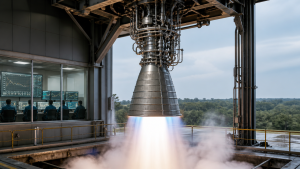
The Indian Space Research Organisation (ISRO) conducted a flight acceptance hot test of the indigenous CE20 cryogenic engine at an uprated thrust level of 220 kN on 9 September 2026. The test took place at the ISRO Propulsion Complex in Mahendragiri, Tamil Nadu, and the engine is linked to the upgraded C32 upper stage of an upcoming LVM3 mission.
CE20 Cryogenic Engine
The CE20 is a cryogenic upper-stage engine developed by ISRO for the LVM3 launch vehicle. It uses liquid oxygen and liquid hydrogen as propellants, which are stored at very low temperatures and are used in high-performance rocket stages.
LVM3 and C32 Upper Stage
LVM3 is India’s heavy-lift launch vehicle used for large satellite missions and human spaceflight-related applications. The C32 stage is the upgraded upper stage associated with the CE20 engine, and the 220 kN thrust configuration is intended to increase payload carrying capability.
Hot Test and Propulsion Systems
During the hot test, ISRO also demonstrated the Liquid Oxygen Tank Pressurisation Module, or LTPM, which is designed for the C32 stages of the Gaganyaan missions. The test followed an earlier sea-level hot test of the CE20 engine on 10 March 2026, which ran for 165 seconds at 22-tonne thrust with an advanced Nozzle Protection System.
Important Facts for Exams
- The CE20 is a cryogenic engine developed by ISRO for the upper stage of LVM3.
- Cryogenic engines use liquid oxygen and liquid hydrogen as propellants.
- The ISRO Propulsion Complex is located at Mahendragiri in Tamil Nadu.
- Gaganyaan is India’s human spaceflight programme and uses human-rated launch systems.
Earlier Technical Milestones
On 7 November 2025, the CE20 engine completed a 10-second test that demonstrated bootstrap-mode startup under vacuum conditions without an auxiliary startup system. The 2026 hot test forms part of the engine’s qualification sequence for higher-thrust operation.
| Related | |
|---|---|