Indore Water Outbreak: Tests Find Multiple Pathogens
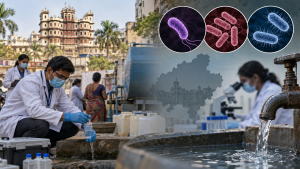
By 5 January 2026, laboratory and surveillance findings had documented an acute diarrhoeal disease outbreak in Bhagirathpura, Indore, Madhya Pradesh.
Laboratory findings and response
Tests of drinking-water samples found contamination, including Vibrio cholerae, Shigella and Escherichia coli. Cases were reported to be declining after the contaminated supply was stopped and treated water distributed. Household surveys, further sampling by teams including the Indian Council of Medical Research (ICMR), National Centre for Disease Control (NCDC), National Institute of Research in Bacterial Infections (NIRBI), AIIMS Kolkata and AIIMS Bhopal, and chlorination were continuing in the affected area.
NHRC seeks report
The National Human Rights Commission took suo motu cognisance on 1 January 2026 and sought a detailed report from the Madhya Pradesh Chief Secretary within two weeks.
Important Facts for Exams
- Cell form: Vibrio cholerae is a Gram-negative, facultative anaerobe with a comma-shaped bacterial form.
- Outbreak serogroups: Vibrio cholerae has two serogroups identified as responsible for cholera outbreaks: O1 and O139.
- Toxin gene transfer: Vibrio cholerae’s cholera-toxin genes are carried by the CTXφ bacteriophage, which produces the toxin only after insertion into bacterial DNA.
- Inquiry mandate: The NHRC may inquire proactively or reactively into human-rights violations by government, including public servants’ negligence in preventing them.
| Related | |
|---|---|