India Targets 100 GW Nuclear Power by 2047
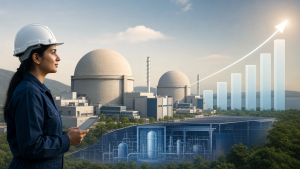
India has set a target of 100 GW of nuclear power capacity by 2047. The plan combines expansion of indigenous reactor fleets, deployment of Small Modular Reactors, and new regulatory provisions for private participation in the civil nuclear sector.
Nuclear Power in India
Nuclear power is electricity generated from controlled nuclear fission in reactors. India operates a three-stage nuclear power programme based on pressurised heavy water reactors, fast breeder reactors, and thorium-based systems.
Key Reactor Types and Institutions
Pressurised Heavy Water Reactors, or PHWRs, use natural uranium as fuel and heavy water as moderator and coolant. Small Modular Reactors, or SMRs, are compact reactors designed for smaller unit sizes and modular deployment. The Bhabha Atomic Research Centre, or BARC, is India’s principal nuclear research institution, and BHAVINI is the public sector company responsible for fast breeder reactor projects.
Recent Institutional and Legal Developments
The Atomic Energy Commission approved Tarapur in Maharashtra for the lead units of the 220 MWe Bharat Small Modular Reactor and the 55 MWe SMR-55. The Prototype Fast Breeder Reactor at Kalpakkam in Tamil Nadu attained first criticality in 2026. The SHANTI Act, 2025, repealed the Atomic Energy Act, 1962, and the Civil Liability for Nuclear Damage Act, 2010, and created a framework for insurance cover, a single composite licence, and foreign-designed reactors with trusted regulatory approvals.
Important Facts for Exams
- India’s three-stage nuclear programme was designed to use domestic uranium resources and later thorium resources.
- First criticality is the stage when a nuclear reactor sustains a self-supporting chain reaction.
- Tarapur in Maharashtra is one of India’s early nuclear power locations and now hosts proposed SMR lead units.
- Fast breeder reactors are associated with plutonium-based fuel cycles and higher fuel utilisation.
Private Sector Entry and Capacity Expansion
Adani Power incorporated two nuclear-dedicated subsidiaries, Rawatbhata-Raj Atomic Energy Ltd. and Coastal-Maha Atomic Energy Ltd., for potential projects in Rajasthan and Maharashtra. The Nuclear Energy Mission uses both large 700 MWe PHWRs and compact SMRs for capacity expansion.
Energy Demand Context
Nuclear power is used as a low-carbon baseload source in electricity systems. India has linked future nuclear expansion with electricity demand from artificial intelligence, semiconductor manufacturing, and data centres.
| Related | |
|---|---|