Important Space Agencies of the World
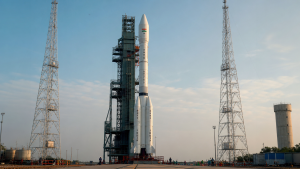
Space agencies drive scientific research, satellite services, deep-space exploration, and international cooperation. They also support communication, weather forecasting, navigation, and national security.
Overview of Key Space Agencies
| Space Agency | Country/Region | Year Established | Headquarters | Primary Launcher Family |
| NASA | United States | 1958 | Washington, D.C. | SLS, Falcon 9, Atlas V |
| ISRO | India | 1969 | Bengaluru | PSLV, GSLV, LVM3 |
| ESA | Europe | 1975 | Paris | Ariane 6, Vega-C |
| CNSA | China | 1993 | Beijing | Long March |
| Roscosmos | Russia | 1992 | Moscow | Soyuz, Angara |
| JAXA | Japan | 2003 | Tokyo | H-IIA, H3 |
Indian Space Research Organisation (ISRO) – India
ISRO is India’s primary agency for space research and development. It works under the Department of Space and operates one of the world’s largest fleets of communication and remote sensing satellites.
- Foundation: Vikram Sarabhai established INCOSPAR in 1962, which evolved into ISRO on August 15, 1969.
- Key Launch Facility: Satish Dhawan Space Centre (SDSC), Sriharikota, Andhra Pradesh.
- Key Launchers: PSLV, GSLV, and LVM3.
- Key Missions:
- Aryabhata: India’s first satellite, launched in 1975 with Soviet assistance.
- Chandrayaan-1: Launched in 2008; confirmed the presence of water molecules on the Moon.
- Mars Orbiter Mission (Mangalyaan): Launched in 2013; India became the first country to orbit Mars on its first attempt.
- Chandrayaan-3: Landed near the lunar south pole in August 2023; India became the fourth nation to soft-land on the Moon.
- Aditya-L1: Launched in 2023 to study the Sun from the Lagrangian Point 1 (L1).
- Future Initiatives: Gaganyaan aims to send Indian astronauts into space. NISAR is a joint radar mission with NASA.
Space Institutional Bodies in India
India has expanded its space ecosystem to encourage private participation through three major bodies.
- Antrix Corporation Limited: Established in 1992; the commercial arm of ISRO that markets space products and services globally.
- NewSpace India Limited (NSIL): Established in 2019; works under the Department of Space and supports commercial launch and satellite services.
- IN-SPACe: Formed in 2020; a single-window nodal agency that authorizes and regulates private space activities in India.
National Aeronautics and Space Administration (NASA) – United States
NASA is the civilian space agency of the United States and a global leader in deep-space exploration, aeronautics, and aerospace research.
- Foundation: Established in 1958 by President Dwight D. Eisenhower after the launch of Sputnik 1.
- Key Launch Facility: Kennedy Space Center, Cape Canaveral, Florida.
- Key Launchers: Space Launch System (SLS) and commercial launch vehicles such as Falcon 9 and Falcon Heavy.
- Key Missions:
- Apollo Program: Sent humans to the Moon; Apollo 11 landed Neil Armstrong and Buzz Aldrin in 1969.
- Voyager 1 and 2: Launched in 1977 to study the outer Solar System; Voyager 1 entered interstellar space in 2012.
- Hubble and James Webb Space Telescopes: Major observatories that study the deep universe.
- Artemis Program: A multi-phase effort to return humans, including the first woman, to the lunar surface.
European Space Agency (ESA) – Europe
ESA is an intergovernmental organization dedicated to space exploration. It currently has 22 member states.
- Foundation: Created in 1975 through the merger of ESRO and ELDO.
- Key Launch Facility: Guiana Space Centre, Kourou, French Guiana.
- Key Launchers: Ariane 6 and Vega-C.
- Key Missions:
- Rosetta: Chased and landed the Philae probe on comet 67P/Churyumov–Gerasimenko in 2014.
- Galileo: Europe’s independent global satellite navigation system.
- JUICE: Launched in 2023 to study Jupiter and its ocean-bearing moons.
- Euclid: Launched in 2023 to map the geometry of the dark universe.
China National Space Administration (CNSA) – China
CNSA is responsible for China’s national space program and has seen rapid growth in the 21st century.
- Foundation: Established in 1993 after the Ministry of Aerospace Industry was split into CNSA and CASC.
- Key Launch Facilities: Jiuquan, Taiyuan, Xichang, and Wenchang launch sites.
- Key Launchers: Long March rocket series.
- Key Missions:
- Shenzhou Program: Human spaceflight missions; Yang Liwei became China’s first astronaut in space in 2003.
- Tiangong Space Station: A permanently crewed space station in low Earth orbit.
- Chang’e Lunar Program: Chang’e 4 landed on the far side of the Moon in 2019; Chang’e 5 and Chang’e 6 completed automated sample-return missions.
- Tianwen-1: China’s first independent Mars mission, which deployed the Zhurong rover in 2021.
Roscosmos State Corporation for Space Activities – Russia
Roscosmos is the main space agency of the Russian Federation and carries forward the legacy of the Soviet space program.
- Foundation: Reorganized in its current corporate form in 2015 after the dissolution of the Russian Federal Space Agency.
- Key Launch Facilities: Baikonur Cosmodrome in Kazakhstan and Vostochny Cosmodrome in Russia’s Far East.
- Key Launchers: Soyuz and Angara rocket families.
- Key Missions:
- Sputnik 1: The first artificial satellite, launched in 1957.
- Vostok 1: Carried Yuri Gagarin into orbit in 1961, making him the first human in space.
- Salyut and Mir: Pioneering long-duration space stations.
- International Space Station (ISS): Roscosmos remains a partner through Soyuz and Progress spacecraft.
Japan Aerospace Exploration Agency (JAXA) – Japan
JAXA is Japan’s national space agency and is known for precise robotic exploration and planetary defense research.
- Foundation: Created in 2003 through the merger of ISAS, NAL, and NASDA.
- Key Launch Facility: Tanegashima Space Center.
- Key Launchers: H-IIA, H3, and Epsilon rockets.
- Key Missions:
- Hayabusa 1 and 2: Sample-return missions to the asteroids Itokawa and Ryugu.
- Kibo: The Japanese Experiment Module attached to the ISS.
- SLIM: Landed on the Moon in early 2024 with high precision.
Other Notable National Space Agencies
Several other countries maintain active space programs that contribute to global exploration.
United Arab Emirates Space Agency (UAESA) – UAE
- Established: 2014.
- Hope Probe (Al-Amal): Entered Mars orbit in 2021 to study the Martian atmosphere and weather cycles.
- The agency also leads the UAE Astronaut Programme and is working on the Rashid Lunar Rover.
Korea Aerospace Research Institute (KARI) – South Korea
- Established: 1989.
- Nuri (KSLV-II): South Korea’s first fully domestically produced space launch vehicle.
- Danuri (Korea Pathfinder Lunar Orbiter): Launched in 2022 to study lunar topography and search for water ice.
Canadian Space Agency (CSA) – Canada
- Established: 1989.
- The CSA is known for space robotics, including Canadarm, Canadarm2, and Dextre.
- Canada is also a partner in the James Webb Space Telescope and the Artemis program.
Australian Space Agency (ASA) – Australia
- Established: 2018.
- Headquarters: Adelaide, South Australia.
- The agency focuses on satellite technology, communications, and international partnerships rather than heavy launch vehicles.
International Space Agreements and Key Concepts
- Outer Space Treaty (1967): The foundation of international space law. It prohibits the placement of nuclear weapons or weapons of mass destruction in space.
- The Karman Line: An imaginary boundary 100 kilometers above Earth’s sea level, widely accepted as the edge of outer space.
- Kessler Syndrome: A theoretical cascade of collisions in low Earth orbit caused by increasing space debris.
- Artemis Accords: A non-binding set of principles for civil space exploration and peaceful lunar utilization.
Rare Facts for Prelims
- ISRO’s first launch site: The first Indian sounding rocket was launched from Thumba, Kerala, in 1963.
- NASA’s first human spaceflight program: Mercury preceded Gemini and Apollo in the U.S. crewed space program.
- ESA’s launch base: The Guiana Space Centre is close to the equator, which helps rockets gain extra launch efficiency.
- JAXA’s asteroid success: Hayabusa 2 returned samples from Ryugu, making Japan a leader in asteroid sample-return missions.
- Roscosmos heritage: The Soviet Union launched the first human, first satellite, and first spacewalk before the modern Russian agency was formed.
- Space law milestone: The Outer Space Treaty entered into force in 1967 and remains the core legal framework for space activities.
| Related | |
|---|---|