Important National Days and Observances in India
India observes a wide range of national days and commemorative dates linked to the Constitution, freedom movement, governance, defence, social reform, science, and public welfare. For Prelims revision, the most useful approach is to remember the date, the event or personality behind it, and the institution or law associated with the observance.
Statutory National Holidays
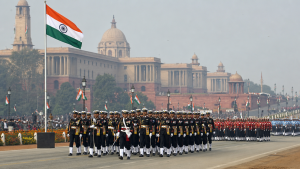
- Republic Day (January 26): Marks the enforcement of the Constitution of India in 1950, replacing the Government of India Act, 1935. The date also recalls the 1930 Purna Swaraj resolution passed at Lahore.
- Independence Day (August 15): Commemorates the transfer of sovereign legislative authority from British rule to the Dominion of India in 1947 under the Indian Independence Act, 1947.
- Gandhi Jayanti (October 2): Observes the birth anniversary of Mahatma Gandhi. The United Nations General Assembly also recognizes it as the International Day of Non-Violence.
Exam point: The three statutory National Holidays are covered under the Negotiable Instruments Act, 1881.
Constitutional and Governance Days
- National Civil Services Day (April 21): Commemorates Sardar Vallabhbhai Patel’s 1947 address to the first batch of All India Services probationers at Metcalf House, Delhi. He described civil servants as the Steel Frame of India.
- National Panchayati Raj Day (April 24): Marks the passage of the Constitution (73rd Amendment) Act, 1992, which came into force on April 24, 1993, giving constitutional status to rural local self-governments.
- National Unity Day / Rashtriya Ekta Diwas (October 31): Observed since 2014 on Sardar Vallabhbhai Patel’s birth anniversary to honour his role in integrating 565 princely states into the Indian Union.
- Constitution Day / Samvidhan Divas (November 26): Earlier known as National Law Day, it marks the formal adoption of the Constitution by the Constituent Assembly on November 26, 1949.
- Good Governance Day (December 25): Established in 2014 on the birth anniversary of former Prime Minister Atal Bihari Vajpayee to promote accountability in public administration.
Defence and Security Commemorations
- Indian Army Day (January 15): Marks the day in 1949 when Field Marshal K.M. Cariappa became the first Indian Commander-in-Chief of the Indian Army, replacing General Sir Francis Butcher.
- Indian Air Force Day (October 8): Commemorates the official establishment of the Indian Air Force as an auxiliary force of the Royal Air Force in 1932.
- Indian Navy Day (December 4): Honours Operation Trident during the 1971 Indo-Pakistani War, when naval missile boats attacked Karachi harbour.
- Kargil Vijay Diwas (July 26): Marks the successful conclusion of Operation Vijay in 1999 and the eviction of Pakistani forces from the Kargil heights.
- Armed Forces Flag Day (December 7): Observed since 1949 to collect funds for the welfare of serving personnel, veterans, and battle casualties.
Important Socio-Economic, Science and Policy Observances
| Date | Observance | Key point |
| January 9 | Pravasi Bharatiya Divas | Marks Mahatma Gandhi’s return from South Africa in 1915; Ministry of External Affairs uses it to engage the overseas Indian diaspora. |
| January 12 | National Youth Day | Birth anniversary of Swami Vivekananda; promotes youth leadership and Vedantic philosophy. |
| January 23 | Parakram Diwas | Birth anniversary of Netaji Subhas Chandra Bose; honours military courage and anti-colonial leadership. |
| January 24 | National Girl Child Day | Observed by the Ministry of Women and Child Development since 2008; addresses sex-ratio imbalances and child marriage under Beti Bachao Beti Padhao. |
| January 25 | National Voters’ Day | Foundation day of the Election Commission of India (January 25, 1950); promotes voter registration and civic literacy. |
| February 28 | National Science Day | Commemorates Sir C.V. Raman’s discovery of the Raman Effect in 1928; he won the Nobel Prize in Physics in 1930. |
| May 11 | National Technology Day | Recalls the successful Pokhran-II nuclear tests (Operation Shakti) in 1998; recognizes indigenous technological, defence, and space innovations. |
| June 29 | National Statistics Day | Birth anniversary of Professor Prasanta Chandra Mahalanobis; highlights socio-economic planning and statistical system design. |
| August 7 | National Handloom Day | Commemorates the launch of the Swadeshi Movement in 1905; supports handloom cooperatives, weavers, and Khadi textiles. |
| August 29 | National Sports Day | Birth anniversary of hockey player Major Dhyan Chand; linked with Khel Ratna, Arjuna, and Dronacharya awards. |
| September 15 | Engineers’ Day | Birth anniversary of Bharat Ratna Sir M. Visvesvaraya; honours infrastructure engineering and industrial development. |
| November 11 | National Education Day | Birth anniversary of Maulana Abul Kalam Azad; honours India’s first Minister of Education. |
| November 15 | Janjatiya Gaurav Divas | Birth anniversary of tribal leader Birsa Munda; recognizes tribal uprisings and indigenous heritage. |
| December 23 | Kisan Diwas | Birth anniversary of former Prime Minister Chaudhary Charan Singh; highlights agricultural reforms and peasant rights. |
Recent Additions to National Observances
- Partition Horrors Remembrance Day (August 14): Instituted in 2021 as Vibhajan Vibhishika Smriti Diwas to remember the human suffering and displacement caused by the 1947 Partition.
- National Javelin Day (August 7): Declared by the Athletics Federation of India in 2021 to commemorate Neeraj Chopra’s Olympic gold in athletics at the Tokyo Olympics.
- National Space Day (August 23): Instituted in 2023 to celebrate the landing of the Chandrayaan-3 Vikram lander near the lunar south pole, named as Shiv Shakti Point.
Key Prelims Takeaways
- Negotiable Instruments Act, 1881: The statutory base for declaring public holidays, including the three National Holidays.
- Republic Day: January 26 is linked both to the Constitution coming into force in 1950 and the Purna Swaraj resolution of 1930.
- Constitution Day: November 26 marks the adoption of the Constitution by the Constituent Assembly in 1949.
- National Unity Day: October 31 is associated with Sardar Patel and the integration of princely states.
- Defence dates: Army Day, Air Force Day, Navy Day, Kargil Vijay Diwas, and Armed Forces Flag Day are high-frequency Prelims topics.
- Science and technology: National Science Day, National Technology Day, and National Space Day are linked to specific Indian achievements and missions.
- Social observances: National Girl Child Day, National Handloom Day, National Education Day, and Janjatiya Gaurav Divas are often asked with their founding personalities or policy background.
Current General Studies comprises current-affairs-based, General Studies-rich study material on policies, laws, institutions, economy, science, environment, governance, international relations, and other varied but important topics for UPSC and State PSC Prelims examinations.
Fortnightly PDF compilations: Available here
Originally written on
May 5, 2026
and last modified on
September 6, 2026.
| Related | |
|---|---|