Important Missile Systems of India
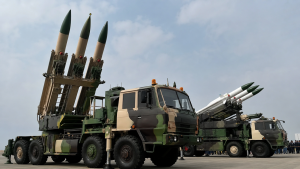
India’s missile arsenal spans ballistic, cruise, air-defence, anti-tank, anti-radiation and submarine-launched systems, with DRDO at the centre of indigenous design and development.
Introduction to India’s Missile Technology
India maintains a highly advanced missile development ecosystem. The Defence Research and Development Organisation (DRDO) designs, tests and manufactures these defence platforms. They form the core of the national military strategy and secure the country’s nuclear triad capabilities.
Integrated Guided Missile Development Programme (IGMDP)
The IGMDP began in 1983 under the leadership of Dr. A.P.J. Abdul Kalam. The programme aimed to achieve complete self-reliance in missile technology. It officially concluded in 2008 after successfully developing five core weapon systems.
- Prithvi: A short-range, surface-to-surface ballistic missile.
- Agni: An intermediate-range, surface-to-surface ballistic missile.
- Trishul: A short-range, low-level surface-to-air missile.
- Akash: A medium-range surface-to-air missile.
- Nag: A third-generation anti-tank guided missile.
Surface-to-Surface Ballistic Missiles
Prithvi Series
The Prithvi series represents India’s first indigenously developed liquid-propellant ballistic missiles.
- Prithvi-I: Developed for Army operations with a range of 150 km and a 1,000 kg payload capacity.
- Prithvi-II: Used by the Air Force, possessing a range of 250 km to 350 km and carrying a 500 kg payload.
- Prithvi-III: Developed for naval operations with a maximum range of 350 km.
Agni Series
The Agni series consists of solid-propellant ballistic missiles designed as the primary land-based delivery vehicle for India’s nuclear deterrent.
- Agni-I: A single-stage, solid-fuel missile with a range of 700 to 900 km.
- Agni-II: A two-stage solid-propellant missile with a range of 2,000 to 2,500 km.
- Agni-III: A high-payload missile with a strike range of 3,000 to 3,500 km.
- Agni-IV: A lightweight, two-stage system with a range of 4,000 km.
- Agni-V: A three-stage, canister-launched, solid-fuel missile with a range exceeding 5,000 km.
- Agni-V with MIRV: Developed under Mission Divyastra, this variant carries Multiple Independently Targetable Re-entry Vehicles. This technology lets a single missile deploy multiple nuclear warheads to strike different targets thousands of kilometres apart.
- Agni-P (Agni Prime): A next-generation, two-stage, canisterised solid-propellant missile with a range of 1,000 to 2,000 km.
Pralay Missile
- Pralay: A short-range, surface-to-surface quasi-ballistic missile with a range of 150 to 500 km. It flies on a low-trajectory path and can change direction in mid-air to evade interceptor missiles.
Cruise Missiles
BrahMos Supersonic Cruise Missile
BrahMos is a joint venture between India’s DRDO and Russia’s NPO Mashinostroyeniya. The system is named after the Brahmaputra and Moskva rivers.
- Speed: It flies at speeds of Mach 2.8 to 3.0, making it one of the fastest operational cruise missiles in the world.
- Propulsion: A two-stage system utilising a solid propellant booster and a liquid ramjet engine.
- Variants: Developed in land, air, sea and submarine-launched configurations.
- Range: The initial range was capped at 290 km. Following India’s entry into the Missile Technology Control Regime (MTCR), updated variants feature a range of 450 km to 500 km.
Nirbhay Subsonic Cruise Missile
- Nirbhay: A long-range, all-weather, subsonic cruise missile with a range of 1,000 km. It flies at speeds of Mach 0.7 to 0.9 and uses sea-skimming capabilities to evade radar detection.
- Indigenous Technology Cruise Missile (ITCM): An upgraded version of the Nirbhay missile featuring an indigenous small turbofan engine.
Submarine-Launched Ballistic Missiles (SLBMs)
The K-family of missiles forms the underwater leg of India’s nuclear triad. These platforms are deployed from Arihant-class nuclear submarines.
- K-15 (Sagarika): A short-range SLBM with a strike range of 750 km.
- K-4: An intermediate-range SLBM with a range of 3,500 km.
- K-5: An advanced SLBM currently under development with a target range of 5,000 km.
Air-to-Air Missiles (AAM)
Astra Series
The Astra series represents India’s indigenous Beyond Visual Range Air-to-Air Missiles (BVRAAM).
- Astra Mk1: Features an indigenous active Radio Frequency (RF) seeker with an effective range of over 110 km.
- Astra Mk2: Features a dual-pulse solid rocket motor that extends the strike range to approximately 200 km. It incorporates Gallium Nitride (GaN) active radar seekers for high-frequency tracking.
- Astra Mk3: Uses Solid Fuel Ducted Ramjet (SFDR) propulsion technology, extending the engagement range to over 350 km.
Surface-to-Air Missiles (SAM)
Akash Missile System
- Akash Mk1: A short-range SAM with a range of 25 km, capable of engaging multiple targets simultaneously in all weather conditions.
- Akash-NG (Next Generation): Features an active electronically scanned array (AESA) radar and a dual-pulse solid motor, extending its range to 30 km.
Quick Reaction and Medium Range SAMs
- QRSAM: Quick Reaction Surface-to-Air Missile with a range of 25 to 30 km, designed to defend mobile Army columns.
- MRSAM: Medium-Range Surface-to-Air Missile developed jointly with Israel. It has a range of 70 km and uses an active radar seeker.
- VL-SRSAM: Vertical Launch Short Range Surface-to-Air Missile developed for the Navy to neutralise aerial threats at a range of 40 to 50 km.
Anti-Tank Guided Missiles (ATGM)
- Nag: A third-generation ATGM with fire-and-forget capability. It uses an imaging infrared seeker and has a range of 4 km.
- Helina: A helicopter-launched version of the Nag missile with a range of 7 to 8 km.
- Dhruvastra: An air-launched version of Helina, designed for integration on Advanced Light Helicopters.
- MPATGM: Man-Portable Anti-Tank Guided Missile. This is a lightweight, infantry-portable missile with a range of 2.5 km.
Anti-Radiation Missiles (ARM)
Anti-radiation missiles target enemy radar and communication networks.
- Rudram-I: India’s first indigenous anti-radiation missile. It uses passive homing heads to locate radio frequencies from a range of 100 to 150 km.
- Rudram-II: An air-to-surface missile capable of travelling at speeds up to Mach 5. It carries a 200 kg payload and suppresses enemy air defences from 300 km away.
- Rudram-III: A long-range anti-radiation missile under development, targeting ranges of 550 to 600 km using Gallium Nitride (GaN) seeker technology.
Anti-Satellite (ASAT) Missile
- Mission Shakti: Conducted in March 2019, this operation used a modified PDV Sport interceptor missile to destroy a live satellite in Low Earth Orbit (LEO) at an altitude of 300 km. This test placed India in the group of nations possessing ASAT capability.
Missile Defense Systems
India utilises a multi-layered Ballistic Missile Defence (BMD) shield designed to intercept incoming hostile missiles.
- Prithvi Air Defence (PAD): Developed for high-altitude exo-atmospheric interception at altitudes of 50 to 80 km.
- Advanced Air Defence (AAD): Developed for low-altitude endo-atmospheric interception at altitudes of 15 to 30 km.
- AD-1 and AD-2 Interceptors: Long-range interceptor missiles designed for both low exo-atmospheric and high endo-atmospheric interception of ballistic missiles and aircraft.
Technical Specifications of Key Indian Missiles
| Missile | Type | Propulsion | Range | Speed / Payload |
| Prithvi-II | Short-range Ballistic | Liquid propellant | 250 – 350 km | Mach 3 / 500 kg payload |
| Agni-V | Intercontinental Ballistic | Three-stage Solid | 5,000+ km | Mach 24 / MIRV capable |
| BrahMos | Supersonic Cruise | Solid booster, Liquid Ramjet | 450+ km | Mach 3.0 / 300 kg payload |
| Nirbhay | Subsonic Cruise | Solid booster, Turbofan | 1,000 km | Mach 0.7 – 0.9 / 450 kg payload |
| K-4 | SLBM (Submarine Launched) | Solid propellant | 3,500 km | Solid engine / Nuclear payload |
| Astra Mk2 | Beyond Visual Range AAM | Dual-pulse Solid | 200 km | Mach 4.5+ / Active RF Seeker |
| Rudram-II | Anti-Radiation | Solid propellant | 300 km | Mach 5 / 200 kg payload |
| Pralay | Quasi-ballistic | Solid propellant | 150 – 500 km | Interceptor-evading manoeuvres |
Recent Context
DRDO issued an Expression of Interest on 18 August 2026 through RCI, Hyderabad, to build private-sector partnerships under the Development-cum-Production Partner model. The framework covers strategic missile systems and sets eligibility, licensing and dual-vendor requirements.
Rare Facts for Prelims
- BrahMos: The name combines the Brahmaputra and Moskva rivers.
- Agni-V: It is canister-launched, which improves storage, mobility and quick reaction capability.
- Mission Divyastra: It demonstrated MIRV technology for India’s strategic missile programme.
- K-4: It significantly extends the reach of India’s submarine-based deterrent compared to K-15.
- Akash-NG: It uses AESA radar, a key upgrade over older air-defence systems.
- Rudram-I: It marked India’s first indigenous anti-radiation missile capability.
| Related | |
|---|---|