Important Indian Laws on Public Property and Trespass
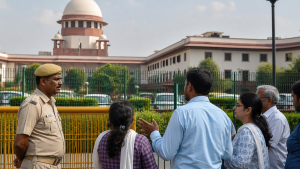
Public property in India is protected through special laws against damage, unlawful occupation, trespass, and public nuisance. The legal framework combines criminal law, civil remedies, and Supreme Court guidelines to safeguard state-owned assets and public order.
Understanding Public Property and Trespass in India
Public property comprises any movable or immovable asset owned, possessed, or controlled by the State, local authorities, or public corporations. Protecting these assets is essential for civic infrastructure and administrative order.
Trespass means unauthorized entry into another person’s property. In Indian law, it is of two types: civil trespass and criminal trespass. Civil trespass is a tort, while criminal trespass is a statutory offence.
Key Legislations Governing Public Property Protection
India has specific statutes to deter vandalism, regulate unauthorized occupation, and punish destruction of public assets.
The Prevention of Damage to Public Property Act, 1984
The Prevention of Damage to Public Property (PDPP) Act, 1984, was enacted to curb destruction of public property during riots, protests, and agitations. It applies across India.
- Definition of Public Property: Under Section 2(b), public property includes movable or immovable assets owned, possessed, or controlled by the Central Government, State Governments, local authorities, corporations established under Central or State Acts, government companies, and public-funded institutions.
- General Mischief and Vandalism: Section 3(1) provides punishment of up to five years’ imprisonment and a fine for damaging public property by mischief.
- Damage to Public Utilities: Section 3(2) covers damage to essential services such as water supply, electricity, public transport, telecommunications, and oil installations. Punishment is rigorous imprisonment from six months to five years, along with a fine.
- Use of Fire or Explosives: Section 4 prescribes stricter punishment where damage is caused by fire or explosive substances. The punishment is rigorous imprisonment from one to ten years, along with a fine.
The Public Premises (Eviction of Unauthorised Occupants) Act, 1971
This Act provides a special administrative mechanism to reclaim government land and buildings from unlawful occupants.
- Eviction Procedures: Estate Officers can issue show-cause notices and pass eviction orders against unauthorized occupants on public premises.
- Recovery of Cost: The administration can recover unpaid rent, damages, and litigation expenses from the unlawful occupant.
- Administrative Speed: The Act avoids lengthy civil court procedures and enables quicker recovery of state property.
Provisions Under the Bharatiya Nyaya Sanhita, 2023
The Bharatiya Nyaya Sanhita (BNS), 2023, replaced the Indian Penal Code (IPC), 1860, on July 1, 2024. It retains and modifies provisions relating to property damage and public disturbance.
- The Concept of Mischief: Section 324 of BNS, 2023 (earlier Section 425 of IPC) defines mischief as intentionally or knowingly causing destruction of property or changes that destroy or diminish its value or utility, resulting in wrongful loss or damage.
- Public Nuisance: Section 270 of BNS, 2023 (earlier Section 268 of IPC) deals with public nuisance. It penalizes acts or illegal omissions causing common injury, danger, or annoyance to the public. Section 292 of BNS, 2023 prescribes fines and imprisonment for general public nuisance.
The Law of Trespass in India
The Indian legal system addresses unauthorized entry into property through both civil and criminal liability.
Criminal Trespass and House-Trespass under the BNS, 2023
Criminal trespass requires specific criminal intent. The BNS, 2023, consolidates the main provisions on trespass.
- Definition of Criminal Trespass: Section 329(1) of BNS, 2023 (earlier Section 441 of IPC) states that criminal trespass occurs when a person enters property in the possession of another with intent to commit an offence, or to intimidate, insult, or annoy the possessor. It also includes unlawfully remaining on the property with the same intent after lawful entry.
- House-Trespass: Section 329(2) of BNS, 2023 (earlier Section 442 of IPC) defines house-trespass as an aggravated form of criminal trespass in a building, tent, or vessel used as a human dwelling, place of worship, or place for custody of property.
- Penalties for Basic Trespass: Section 329(3) of BNS, 2023 (earlier Section 447 of IPC) provides imprisonment up to three months, a fine up to USD5,000, or both. The BNS increased the maximum fine from USD500 to USD5,000.
- Lurking House-Trespass and House-Breaking: Later provisions of Section 329 BNS deal with stealthy entry and forced entry, with harsher penalties, especially for offences committed at night.
Civil Trespass as a Law of Tort
Civil trespass is a common law civil wrong. It focuses on violation of possession rather than the intruder’s intent.
- Actionable Per Se: Civil trespass is actionable without proof of actual damage. Mere unauthorized entry onto another person’s land is enough.
- Lack of Criminal Intent: Unlike criminal trespass, civil trespass does not require intent to insult, annoy, or commit an offence. Even accidental entry can create civil liability.
- Available Remedies: Remedies include injunctions, monetary damages, and the right to peaceably re-enter the property.
- Private Defense: Under Section 34 of BNS, 2023, a possessor may use reasonable force in private defense of property against a trespasser.
Supreme Court Guidelines on Public Property Damage
Because of gaps in enforcement during large protests, the Supreme Court issued guidelines to improve accountability for damage to public and private property.
In Re: Destruction of Public and Private Properties v. State of Andhra Pradesh (2009)
The Supreme Court took suo motu cognizance of large-scale vandalism during public agitations and formed two expert committees: the Justice K.T. Thomas Committee and the Fali S. Nariman Committee.
- Thomas Committee Recommendations: Once the prosecution proves that public property was damaged during a direct action called by an organization and that the accused participated, guilt may be presumed. The burden then shifts to the accused. The committee also recommended liability for leaders of organizing groups for abetment.
- Nariman Committee Recommendations: The committee proposed strict civil liability for rioters and protest organizers. It also suggested designated Claims Commissioners to assess and recover damages.
- Status of Guidelines: The Supreme Court approved these recommendations and directed that they operate as binding guidelines until formal legislative amendments are made.
Koshy Jacob v. Union of India (2017)
The Supreme Court reiterated the need to update statutory frameworks so that organizers of protests can be made financially liable for public disruption. It also recognized recourse for those who suffer losses due to unlawful public agitations.
Recent Context
In 2026, the Karnataka Cabinet cleared a bill regulating use of government premises and public property. It requires prior permission for gatherings on state-maintained property and treats unauthorized use as trespass.
Statutory Summary and Offence Comparison
| Law / Section | Area of Focus | Essential Requirement | Maximum Penalty / Remedy |
| PDPP Act, 1984 – Section 3(1) | Damage to general public property | Intent or knowledge to commit mischief | Imprisonment up to 5 years and a fine |
| PDPP Act, 1984 – Section 3(2) | Damage to public utilities (water, power, transport) | Mischief affecting essential utility infrastructure | Rigorous imprisonment of 6 months to 5 years, plus fine |
| PDPP Act, 1984 – Section 4 | Damage by fire or explosives | Use of fire or explosive substances to cause mischief | Rigorous imprisonment of 1 to 10 years, plus fine |
| BNS, 2023 – Section 329(3) | Criminal trespass | Entry with intent to commit offence, intimidate, insult, or annoy | Imprisonment up to 3 months, fine up to USD5,000, or both |
| BNS, 2023 – Section 270 | Public nuisance | Act or omission causing common injury, danger, or annoyance | Fine and court directions to remove the source of nuisance |
| Civil Law of Torts | Civil trespass | Unauthorized entry onto private land (actionable per se) | Court injunctions and compensatory damages |
Rare Facts for Prelims
- PDPP Act burden: In many riot-related cases, proving the exact individual who caused damage is difficult, which is why courts have discussed presumptions and collective liability.
- Public property definition: The PDPP Act covers not only government-owned assets but also property controlled by public corporations and government companies.
- House-trespass scope: A vessel can also qualify for house-trespass if it is used as a human dwelling or for custody of property.
- Public nuisance link: Public nuisance is punishable even when no single individual is specially affected, as long as the public at large is inconvenienced or endangered.
- Criminal trespass intent: Mere entry is not enough for criminal trespass; the prosecution must show intent to commit an offence or to intimidate, insult, or annoy.
- Private defense: The right of private defense of property is limited to reasonable force and cannot be used as a licence for excessive harm.
| Related | |
|---|---|