Important India-Nepal Defence and Military Cooperation Facts
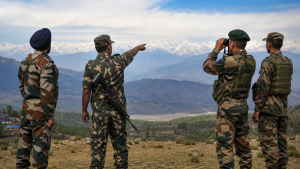
India and Nepal share a long-standing defence partnership shaped by an open border, deep cultural ties, and regular military cooperation. The relationship covers treaty-based security links, Gorkha recruitment, joint exercises, training, equipment support, and veteran welfare.
The Foundation of India-Nepal Defence Relations
India and Nepal maintain a unique security relationship built on geography, open borders, and close cultural ties. This military connection is a key part of India’s Neighbourhood First policy.
Legal and Treaty Framework
The defence relationship rests on formal treaties and agreements that guide bilateral security cooperation.
- The 1950 Treaty of Peace and Friendship: This is the cornerstone of bilateral relations. Under Article 5, Nepal has the right to import arms, ammunition, and military equipment from or through India for its security.
- The 1947 Tripartite Agreement: This agreement between India, the United Kingdom, and Nepal governs the recruitment of Nepali Gorkha soldiers. It ensured that Gorkhas would receive the same service conditions, pay, and pensions as their Indian counterparts.
The Gorkha Connection
Nepali Gorkha soldiers form a vital human bridge between the armed forces of both countries.
- Regimental Strength: The Indian Army has seven Gorkha Rifles regiments, comprising roughly 40 battalions.
- Personnel Count: Approximately 32,000 to 42,000 Gorkha soldiers from Nepal serve in the Indian Army at any given time.
- The Agnipath Scheme Issue: In 2022, India introduced the Agnipath scheme for short-term military recruitment. Nepal raised concerns over the four-year service limit, pension benefits, and post-service employment. As a result, recruitment of Nepali Gorkhas into the Indian Army remains suspended while both governments discuss the terms.
The Unique Tradition of Honorary General Rank
The two countries follow a rare military tradition of exchanging honorary ranks for army chiefs.
- The Exchange of Rank: The Chief of Army Staff of the Indian Army is conferred the honorary rank of General of the Nepali Army. Similarly, the Chief of Army Staff of the Nepali Army is made an honorary General of the Indian Army.
- Historical Origin: This tradition began in 1950.
- Recent Event: Indian Army Chief General Dhiraj Seth received the honorary rank of General of the Nepali Army on 17 August 2026 at Sheetal Niwas in Kathmandu. The honour was conferred by Nepal’s President Ram Chandra Paudel.
Joint Military Exercise: Surya Kiran
India and Nepal conduct a bilateral military exercise to improve operational readiness and interoperability.
- Nature of the Exercise: Exercise Surya Kiran is an annual joint military training event.
- Alternating Venues: The exercise is conducted alternately in India and Nepal.
- Core Objectives: It focuses on counter-terrorism, high-altitude warfare, and humanitarian assistance and disaster relief (HADR) operations.
- Recent Iteration: The 18th edition of Surya Kiran trained soldiers from both nations in jungle warfare and disaster management.
Defence Equipment Supplies and Assistance
India remains an important partner in modernising the Nepali Army through hardware support and training.
- Hardware Deliveries: India supplies infantry weapons, ammunition, bulletproof jackets, and communication equipment.
- Vehicles and Aviation: India has supplied more than 50 military utility vehicles to Nepal’s military. It has also exported Advanced Light Helicopters (ALH) Dhruv and Indian Small Arms System (INSAS) rifles to Nepal.
- Military Training: Over 250 Nepali Army personnel receive training annually in Indian military academies, including the National Defence Academy (NDA), Indian Military Academy (IMA), and Defence Services Staff College (DSSC).
Ex-Servicemen Welfare and Pension Administration
A large population of Indian Army veterans in Nepal is supported through a dedicated administrative network.
- Pensioner Population: More than 1.25 lakh Indian Army pensioners live in Nepal.
- Pension Paying Offices (PPOs): India operates three Pension Paying Offices in Pokhara, Dharan, and Kathmandu to disburse pensions.
- Welfare Schemes: The Indian Army conducts welfare programmes, medical camps, and drinking water projects for veterans and their families in Nepal.
Summary of Key Bilateral Defence Elements
| Aspect | Details and Facts |
| Cornerstone Treaty | 1950 Treaty of Peace and Friendship (Article 5) |
| Recruitment Agreement | 1947 Tripartite Agreement (India, UK, Nepal) |
| Joint Exercise | Exercise Surya Kiran (annual, alternating locations) |
| Honorary Rank | Mutual exchange of the rank of General (began in 1950) |
| Pensioners in Nepal | Over 1.25 lakh Indian Army ex-servicemen |
| Recent Procurement | Over 50 military utility vehicles supplied by India |
Recent Context
General Dhiraj Seth received the honorary rank of General of the Nepali Army on 17 August 2026 in Kathmandu. He also held bilateral talks with Nepali Army Chief General Ashok Raj Sigdel and handed over military and medical equipment as part of ongoing defence cooperation.
Rare Facts for Prelims
- Open Border Length: India and Nepal share an open border of about 1,751 km.
- Reciprocal Honor: The honorary general rank exchange is one of the few such military traditions in the world.
- Veteran Support Network: Nepal hosts three Indian Pension Paying Offices, which is unusual for a neighbouring country.
- Gorkha Legacy: Nepali Gorkhas have served in the Indian Army for generations and are known for their strong regimental identity.
- Disaster Cooperation: HADR is a major focus area because both countries are highly vulnerable to earthquakes, floods, and landslides.
- Strategic Trust: Defence cooperation between India and Nepal is often seen as a key pillar of regional trust building in South Asia.
| Related | |
|---|---|