IISc Tests Antibiotic Combination Against Drug-Resistant TB
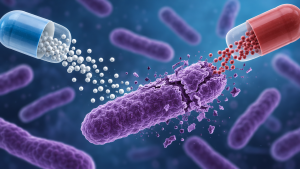
Researchers at the Indian Institute of Science (IISc), Bengaluru, reported a strategy to counter drug-resistant tuberculosis on 16 November 2026. The study, published in Microbiology Spectrum, pairs isoniazid with vancomycin to restore isoniazid’s activity against Mycobacterium tuberculosis.
Laboratory and animal-model results
The team tested the combination on clinical isolates from patients with drug-resistant TB, with the National Tuberculosis Institute, Bengaluru. Most isolates, including multidrug-resistant (MDR) strains, showed more than 90% lower bacterial growth under combination treatment.
Isoniazid requires activation by a bacterial enzyme, and mutations can block this pathway. The researchers found that the combination damages the bacterium’s cell-wall integrity, enabling vancomycin to penetrate and kill it. In an MDR-infected mouse model, the drugs together produced an approximately tenfold reduction in bacterial load in the lungs and spleen after 10 days; the individual drugs did not significantly reduce the burden. Lung examination also found fewer granulomas.
Nagasuma Chandra, Professor in IISc’s Department of Biochemistry, was the corresponding author; PhD student Sukriti Pal was first author. The mouse experiments involved Amit Singh of IISc’s Centre for Infectious Disease Research. The team is working to advance the combination towards human clinical trials.
Important Facts for Exams
- Isoniazid activation: Isoniazid is a prodrug activated by the bacterial enzyme KatG; its active NAD adduct then inhibits InhA, disrupting fatty-acid synthesis.
- Vancomycin target: Vancomycin binds the D-Ala-D-Ala motif of peptidoglycan precursors, blocking their processing during bacterial cell-wall construction.
- Acid-fast staining: Mycobacterium tuberculosis has a mycolic-acid-rich waxy coating that impairs Gram staining; acid-fast or fluorescent stains are used for microscopic identification.
| Related | |
|---|---|