India and Seychelles Strengthen Cooperation in Fisheries, Aquaculture and Blue Economy
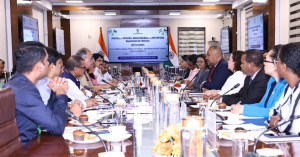
India and Seychelles held a bilateral meeting in New Delhi on 25 August 2026 to expand cooperation in fisheries, aquaculture, and the blue economy. The talks were led by Dr. Abhilaksh Likhi, Secretary of the Department of Fisheries, and H.E. Mr. Wallace Cosgrow, Seychelles’ Minister of Fisheries, Agriculture and Blue Economy.
Fisheries and Aquaculture Cooperation
The two sides discussed a bilateral Memorandum of Understanding focused on fisheries and aquaculture. The agenda included marine aquaculture, also called mariculture, modern hatchery development, tuna fisheries optimisation, and fish stock assessment.
Mariculture is the cultivation of marine organisms in seawater, and hatcheries are facilities where fish seed or larvae are produced under controlled conditions. Fish stock assessment is a scientific method used to estimate the size, structure, and sustainability of fish populations.
Technology and Monitoring Systems
The delegations discussed the use of artificial intelligence for harvest management, digital fisheries data systems, and upgraded monitoring, control, and surveillance infrastructure. Monitoring, control, and surveillance systems are used in fisheries governance to track fishing activity and support regulatory compliance.
The talks also covered reciprocal laboratory access and jointly designed pilot projects. Annual work plans were discussed as a mechanism for structured implementation between the two countries.
Blue Economy and Tuna Value Chain
The blue economy refers to the sustainable use of ocean resources for economic activity, fisheries, transport, tourism, and marine conservation. India and Seychelles discussed expansion of the tuna value chain, including processing capacity, product diversification, and fish-waste management.
Tuna fisheries are economically important in the Indian Ocean region, and tuna processing includes cleaning, canning, freezing, and value-added product development. Sustainable fish-waste management covers the handling of by-products from processing units and landing centres.
Important Facts for Exams
- India’s Department of Fisheries functions under the Ministry of Fisheries, Animal Husbandry and Dairying.
- Mariculture is a branch of aquaculture that takes place in marine waters.
- Fish stock assessment is a core tool in fisheries science and resource management.
- Monitoring, control, and surveillance systems are used to regulate fishing operations and reduce illegal fishing.
India’s Fisheries Sector
India’s national fish production has reached 19.7 million tonnes. India’s seafood exports were valued at USD 8.46 billion.
| Related | |
|---|---|