Major GI-Tagged Products from Assam
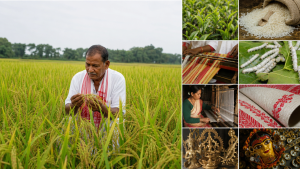
Assam’s GI-tagged products reflect the state’s rich mix of agriculture, handloom traditions and indigenous crafts. These products are protected under the Geographical Indications of Goods (Registration and Protection) Act, 1999, which helps prevent unauthorized use and supports local producers.
From aromatic rice and specialty tea to silk, textiles and ritual arts, Assam’s GI portfolio is closely tied to its soil, climate and cultural practices. For Prelims revision, the key is to remember the product, category, place of origin and a few distinctive features.
GI Classification in Assam
- Agricultural products: crop varieties, fruits, tea and other farm produce linked to specific agro-climatic conditions.
- Handicraft products: handwoven textiles, ritual crafts and artistic creations made with traditional skills.
- Manufactured products: traditional foods and beverages made through local processing or fermentation methods.
Major Agricultural GI Products
- Assam Tea (Logo): The first GI-tagged product from Assam, registered in 2007. It is made from Camellia sinensis var. assamica and is known for its full-bodied, malty flavour and deep amber liquor.
- Assam Karbi Anglong Ginger: Grown in the hill ranges of Karbi Anglong district. It includes the local varieties Nadia and Awa, and is valued for high dry matter, strong aroma and comparatively low fibre.
- Tezpur Litchi: Grown in and around Tezpur in Sonitpur district. It is known for juicy pulp, deep red colour, high sugar content and balanced sweetness.
- Kaji Nemu: An endemic citrus variety of Assam and the State Fruit of Assam. It has an elongated shape, high juice yield, pleasant aroma and resistance to major citrus pests.
- Joha Rice: A group of winter rice varieties known for natural aroma, small grain size and premium culinary value. It is also associated with essential fatty acids and natural antioxidants.
- Boka Chaul: Also called mud rice or cold rice, it is grown mainly in Nalbari, Barpeta and Darrang districts. It softens after soaking in ambient-temperature water for 40-60 minutes, without cooking.
- Chokuwa Rice: A soft rice variety traditionally consumed by the Ahom dynasty and used in dishes such as pitha and laru during Bihu festivals.
Assam’s Signature Silk and Handloom GI Products
- Muga Silk of Assam: Produced by the silkworm Antheraea assamensis, which feeds on Som and Soalu leaves. It has a natural golden-yellow lustre that deepens with washing.
- GI status: Muga silk received GI protection for both raw yarn and its logo.
- Gamosa of Assam: A handwoven white cotton cloth with red borders and floral motifs such as Kalka and Phool. It is an important symbol of respect, identity and hospitality.
- Traditional use of Gamosa: It is widely used during Bihu, public functions and ceremonial occasions.
GI-Tagged Traditional Arts from Majuli
- Majuli Mask Making: Traditional three-dimensional masks, or Mukha, made in the Sattras of Majuli island using bamboo, cane, clay, cloth and cow dung.
- Use in performance: These masks are used in Bhaona theatre to depict mythological and dramatic characters.
- Majuli Manuscript Painting: An ancient art form made on prepared bark sheets of the Sanchi tree using natural mineral dyes.
- Historical association: It was traditionally used to illustrate scriptures and Vaishnavite texts preserved in the Sattras.
Traditional Beverage and Manufactured GI Product
- Jadima: A traditional rice wine brewed by the Dimasa tribe of Dima Hasao district.
- Ingredients: It is made from sticky rice called Bairing and fermented with a natural starter culture called Pithu, derived from the bark of the Thembra tree (Clerodendrum viscosum).
- Significance: It is described as the first traditional beverage from the North East region to receive a GI tag.
| Product | Category | Origin / Area | Key feature |
| Assam Tea (Logo) | Agricultural | Brahmaputra Valley | Malty flavour, strong body, bright liquor |
| Muga Silk | Handicraft | Upper & Central Assam | Natural golden colour, durable fibre |
| Assam Karbi Anglong Ginger | Agricultural | Karbi Anglong District | Low fibre, high organic oil content |
| Tezpur Litchi | Agricultural | Sonitpur District | Deep red peel, juicy pulp, high sweetness |
| Joha Rice | Agricultural | Brahmaputra Plains | Small grain, natural aroma |
| Kaji Nemu | Agricultural | State-wide | Elongated fruit, high juice yield |
| Boka Chaul | Agricultural | Lower Assam | Softens in cold water without cooking |
| Gamosa of Assam | Handicraft | State-wide | White base, red borders, handwoven motifs |
| Jadima | Manufactured | Dima Hasao District | Fermented rice wine of the Dimasa tribe |
| Majuli Mask Making | Handicraft | Majuli Island | Masks used for Bhaona theatre |
| Majuli Manuscript Painting | Handicraft | Majuli Sattras | Sanchi bark paintings using natural pigments |
Key Prelims Takeaways
- First GI product from Assam: Assam Tea (Logo), registered in 2007.
- State Fruit: Kaji Nemu is the State Fruit of Assam.
- Exclusive silk: Muga silk is produced by the semi-domesticated silkworm Antheraea assamensis.
- Unique rice fact: Boka Chaul softens in water without cooking because of its low amylose content.
- Aromatic rice compound: Joha rice gets its fragrance from 2-acetyl-1-pyrroline.
- Majuli’s GI crafts: Majuli has two important GI-tagged art forms — mask making and manuscript painting.
- Traditional beverage: Jadima is associated with the Dimasa tribe of Dima Hasao.
Current General Studies comprises current-affairs-based, General Studies-rich study material on policies, laws, institutions, economy, science, environment, governance, international relations, and other varied but important topics for UPSC and State PSC Prelims examinations.
Fortnightly PDF compilations: Available here
Originally written on
May 26, 2026
and last modified on
September 6, 2026.
| Related | |
|---|---|