F-16 Fighter Jet Crashes in Michigan
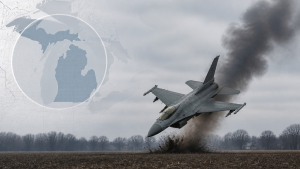
An F-16 fighter jet crashed in rural Michigan on 17 September 2026 during a routine joint training mission at a National Guard base in Alpena, Michigan. The aircraft belonged to the Texas Air National Guard’s 149th Fighter Wing, which is based at Joint Base San Antonio-Lackland. The pilot ejected before impact and was in stable condition at a local hospital.
F-16 Fighting Falcon
The F-16 Fighting Falcon is a single-engine, multirole fighter aircraft developed in the United States. It is used by the United States Air Force and the Air National Guard for air defence, strike, and training missions. The aircraft is known for its fly-by-wire flight control system and high manoeuvrability.
Air National Guard and Fighter Wings
The Air National Guard is a reserve component of the United States Air Force. A fighter wing is a major operational unit that can include fighter squadrons, maintenance units, and support elements. The 149th Fighter Wing is one such unit under the Texas Air National Guard.
Crash Response and Hazardous Materials
Emergency services reached the crash site in Blair Township, south-west of Traverse City in Grand Traverse County. A temporary evacuation order covered residents within a one-mile radius because of a hazardous chemical spill linked to the wreckage, with hydrazine mentioned as a likely substance. Hydrazine is a toxic propellant used in some military and space systems.
Important Facts for Exams
- The F-16 Fighting Falcon first entered service in 1978 with the United States Air Force.
- The aircraft is a fourth-generation fighter and is used by many air forces worldwide.
- Bird strikes are a known aviation hazard and can affect engines, windscreens, and flight control surfaces.
- Hydrazine is classified as a highly toxic and flammable chemical used in aerospace applications.
Investigation and Safety Protocols
The cause of the crash remained under investigation after the incident. Military aviation accidents often involve technical inspection, flight-data review, and safety checks at the crash site.
| Related | |
|---|---|