Credit rating
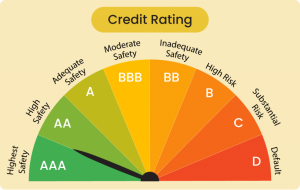
A credit rating is an evaluation of the creditworthiness of a borrower, whether an individual, corporation, or government. It reflects the ability and likelihood of the borrower to meet financial obligations fully and on time. Credit ratings play a crucial role in financial markets by influencing interest rates, investment decisions, and access to capital. These ratings are typically expressed through symbols or letters assigned by recognised credit rating agencies.
Background and Purpose
Credit ratings originated as a means to assess the risk associated with lending and investment. The concept gained prominence during the late nineteenth and early twentieth centuries with the emergence of credit rating agencies in the United States. Today, ratings serve as vital indicators for investors and lenders to gauge the level of default risk associated with a particular financial instrument or borrower.
The main objectives of credit ratings include:
- Assessing the probability of default.
- Facilitating investment decisions by providing standardised risk measures.
- Enhancing transparency in financial markets.
- Assisting issuers in accessing capital markets efficiently.
Credit ratings contribute to financial stability by helping investors compare risks across issuers and asset classes.
Major Credit Rating Agencies
Globally, the credit rating industry is dominated by three major agencies:
- Standard & Poor’s (S&P)
- Moody’s Investors Service
- Fitch Ratings
These agencies assign ratings on various entities such as sovereign governments, corporations, financial institutions, and specific debt instruments like bonds. Their methodologies are based on both quantitative and qualitative analysis, including factors such as financial performance, management quality, industry conditions, and macroeconomic outlook.
Rating Scales and Symbols
Each credit rating agency employs its own rating scale, though there is general consistency across them. Ratings are usually divided into two broad categories:
-
Investment Grade: Indicates relatively low risk of default.Examples:
- S&P: AAA, AA, A, BBB
- Moody’s: Aaa, Aa, A, Baa
- Fitch: AAA, AA, A, BBB
-
Speculative Grade (or Junk): Indicates higher default risk and speculative investment potential.Examples:
- S&P: BB, B, CCC, CC, C, D
- Moody’s: Ba, B, Caa, Ca, C
- Fitch: BB, B, CCC, CC, C, D
Modifiers such as plus (+) or minus (–), or numerical suffixes (1, 2, 3), are often added to show finer distinctions within categories.
Types of Credit Ratings
Credit ratings can be classified based on the subject and purpose:
- Sovereign Credit Rating: Assesses the creditworthiness of a national government and its capacity to repay debt.
- Corporate Credit Rating: Evaluates the ability of a business enterprise to meet its financial commitments.
- Issue-specific Rating: Assigned to a specific financial instrument like a bond or debenture.
- Short-term and Long-term Ratings: Based on the duration of the debt instrument, focusing on near-term or extended repayment periods.
Methodology and Factors Considered
Credit rating agencies rely on both quantitative and qualitative assessment criteria.Key factors include:
- Financial Analysis: Profitability ratios, liquidity ratios, leverage ratios, and cash flow adequacy.
- Business Risk: Market competition, industry trends, and operational efficiency.
- Management Evaluation: Competence, governance structure, and strategic planning.
- Economic and Political Environment: Country risk, policy stability, inflation, and fiscal health.
- Historical Payment Behaviour: Past record of repayment and defaults.
Analysts gather data from audited financial statements, management interviews, industry reports, and macroeconomic indicators. The findings are then reviewed by a rating committee before publication.
Importance and Implications
Credit ratings have significant implications for both issuers and investors.For issuers, a favourable rating can:
- Lower borrowing costs.
- Improve market reputation.
- Increase investor confidence and market access.
For investors, ratings provide:
- A benchmark for risk assessment.
- Guidance for portfolio diversification.
- A basis for comparing different investment options.
Financial institutions and mutual funds often use credit ratings to determine eligibility for investment and to comply with regulatory requirements.
Advantages and Limitations
Advantages:
- Promote transparency and standardisation in financial markets.
- Assist in pricing financial instruments accurately.
- Enhance investor protection through informed decision-making.
- Facilitate cross-border investment by providing globally recognised benchmarks.
Limitations:
- Ratings are opinions, not guarantees; unexpected events can lead to defaults even among highly rated entities.
- Potential for conflicts of interest, as issuers often pay rating agencies for evaluations.
- Lag effect, where ratings may not immediately reflect sudden financial deterioration.
- Over-reliance on ratings by investors may reduce independent risk assessment.
Credit Rating in India
In India, the credit rating industry is regulated by the Securities and Exchange Board of India (SEBI). Prominent credit rating agencies include:
- CRISIL (Credit Rating Information Services of India Limited)
- ICRA (Investment Information and Credit Rating Agency of India)
- CARE (Credit Analysis and Research Limited)
- India Ratings and Research
- Brickwork Ratings
These agencies follow SEBI’s guidelines to ensure transparency, consistency, and accountability in rating processes. Ratings issued by these agencies are widely used by banks, investors, and regulators for assessing credit risk.
Criticism and Reforms
Credit rating agencies have faced criticism, particularly after major financial crises such as the 2008 global financial meltdown, when overly optimistic ratings contributed to the mispricing of mortgage-backed securities. Critics argue that issuer-paid models lead to biased ratings. As a result, regulatory reforms have been introduced in several jurisdictions to enhance accountability, including:
- Mandatory disclosure of rating methodologies.
- Periodic review of ratings.
- Enhanced competition and oversight mechanisms.
- Reduction of undue reliance on ratings in financial regulations.
| Related | |
|---|---|