Bali Action Plan
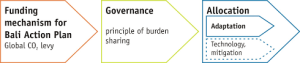
The Bali Action Plan (BAP) is a significant international framework adopted under the United Nations Framework Convention on Climate Change (UNFCCC) to advance global efforts in addressing climate change. Agreed upon during the 13th Conference of the Parties (COP 13) held in Bali, Indonesia, in December 2007, the plan laid the foundation for negotiations leading to a comprehensive climate agreement to succeed the Kyoto Protocol. It marked a pivotal shift in global climate policy by bringing both developed and developing countries into a unified process for long-term cooperative action against climate change.
Background and Context
The early 2000s witnessed growing scientific evidence from the Intergovernmental Panel on Climate Change (IPCC) highlighting the urgent need to mitigate global warming. The Kyoto Protocol, adopted in 1997, committed developed nations to binding emission reduction targets but did not impose obligations on developing countries. By the mid-2000s, it became clear that a more inclusive framework was needed to ensure wider participation and stronger commitments post-2012, when the first commitment period of the Kyoto Protocol was due to end.
The Bali Climate Conference was therefore convened to establish a roadmap for future negotiations. The conference was attended by representatives from over 180 countries, along with observers from intergovernmental organisations, non-governmental organisations, and the scientific community. After intense discussions, the parties adopted the Bali Action Plan, which initiated a two-year process to negotiate a post-Kyoto international climate agreement.
Main Components of the Bali Action Plan
The Bali Action Plan outlined four key pillars of long-term cooperative action. Each element was designed to address different dimensions of the climate crisis:
-
Mitigation – The plan called for enhanced national and international action to reduce greenhouse gas emissions by both developed and developing countries.
- Developed nations were encouraged to take measurable, reportable, and verifiable (MRV) commitments or actions.
- Developing nations were invited to undertake nationally appropriate mitigation actions (NAMAs) in the context of sustainable development, supported and enabled by technology, financing, and capacity-building.
-
Adaptation – Recognising the increasing impacts of climate change, the plan promoted efforts to strengthen adaptive capacity, resilience, and reduce vulnerability in developing nations, particularly least developed countries (LDCs) and small island developing states (SIDS).
- It encouraged integration of adaptation strategies into national policies and supported capacity-building for communities most affected by climate risks.
-
Technology Development and Transfer – The BAP emphasised the need for accelerated development and deployment of clean technologies.
- It proposed mechanisms to facilitate the transfer of environmentally sound technologies from developed to developing countries.
- The plan also recognised the role of intellectual property rights (IPRs) and financing mechanisms in facilitating technological cooperation.
-
Finance – The plan underlined the necessity of providing adequate, predictable, and sustainable financial resources to support mitigation and adaptation actions in developing countries.
- It aimed to enhance the role of existing financial mechanisms and explore innovative funding sources under the UNFCCC framework.
The Bali Road Map
The adoption of the Bali Action Plan also led to the creation of the Bali Road Map, which comprised a series of decisions aimed at advancing negotiations. It established the Ad Hoc Working Group on Long-term Cooperative Action (AWG-LCA) to conduct discussions and draft proposals on the four pillars.
The roadmap set a two-year timeline for negotiations, with the goal of achieving a comprehensive and binding agreement by COP 15 in Copenhagen (2009). The Bali Road Map thus served as a political commitment to bridge the gap between developed and developing nations in addressing climate challenges collectively.
Significance of the Plan
The Bali Action Plan was a turning point in global climate diplomacy for several reasons:
- Inclusivity – Unlike the Kyoto Protocol, which focused primarily on developed countries, the BAP included both developed and developing nations in the negotiation process, recognising the principle of common but differentiated responsibilities (CBDR).
- Comprehensive Framework – It broadened the climate agenda beyond emissions reduction to include adaptation, technology, and financing — reflecting a holistic understanding of the climate crisis.
- Foundation for Future Agreements – The process initiated under the BAP ultimately contributed to the formation of later agreements such as the Cancún Agreements (2010) and the Paris Agreement (2015).
Challenges and Criticisms
Despite its achievements, the Bali Action Plan faced several challenges during implementation and negotiations:
- Divergent Interests – Developed and developing countries differed over the extent of emission reduction commitments and financial contributions. Developing countries, led by India and China, insisted that developed nations take the lead due to their historical emissions.
- Lack of Binding Commitments – While the BAP provided a framework for negotiations, it did not establish legally binding targets, leading to uncertainty about the enforcement of pledges.
- Slow Progress – The two-year timeline for finalising a comprehensive agreement proved overly ambitious, culminating in the Copenhagen Conference (2009), which failed to produce a legally binding outcome.
- Finance and Technology Transfer Issues – Persistent disagreements over the scale and sources of climate finance and barriers to technology transfer hindered progress under the plan.
| Related | |
|---|---|