Scotland Records Up to 405 Beaver Territories
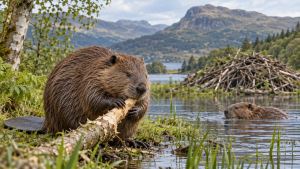
A survey conducted by NatureScot, Beaver Trust and the University of Exeter between 2024 and 2026 recorded 349 confirmed beaver territories and 56 possible territories across Scotland’s Tayside and Forth regions. NatureScot published the findings on 16 November 2026.
Territories and activity increase
The total of up to 405 territories compares with 39 recorded in 2012, 114 in 2017/18 and 251 in 2020/21. Survey teams covered 2,397 km of watercourses and identified more than 20,000 confirmed signs of beaver activity, including dams, burrows and lodges. The survey found that half of recorded activity was in waterside woodlands; in 2020/21, 41% was on agricultural land.
Population expansion and releases
NatureScot said the annual growth in territory numbers had slowed, following a pattern observed in Europe as reintroduced populations become established. NatureScot mammal adviser Dr Roo Campbell said in November 2026 that beavers were continuing to expand into new areas, bringing benefits for nature and people. Beaver Trust’s head of restoration, Dr Roisin Campbell-Palmer, described the survey as potentially the largest ever undertaken for beaver activity. Between April 2024 and March 2025, 47 beavers were released in Scotland, including in the Cairngorms National Park, the Trossachs and Tay Forest Park; another 30 were moved to projects in England and Wales.
Important Facts for Exams
- Genetic lineages: Mitochondrial DNA analysis identifies two significant Eurasian beaver lineages: a western group in western and central Europe and an eastern group east of the Oder and Vistula.
- Dam effects: Beaver dams trap sediment, improve water quality and recharge groundwater, while increasing cover and food available to trout and salmon.
- Territory composition: A beaver territory is typically occupied by a family group: breeding adults, the year’s kits and sometimes offspring from the previous year.
- Scottish legal protection: In Scotland, Eurasian beavers became a European protected species in 2019; capture, killing or damage to breeding sites generally requires a licence.
| Related | |
|---|---|