SC/ST Creamy Layer Exclusion Case
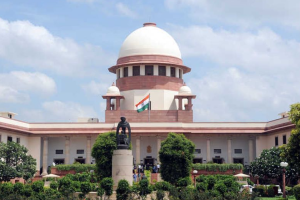
The Union Ministry of Social Justice and Empowerment filed an affidavit in the Supreme Court of India on 6 August 2026 opposing petitions that seek to extend the “creamy layer” exclusion to Scheduled Castes and Scheduled Tribes. The Centre stated that the constitutional reservation framework is based on historical and social backwardness and not on economic status alone.
Reservation and Constitutional Basis
Reservation for Scheduled Castes and Scheduled Tribes is linked to Articles 15 and 16 of the Constitution of India, which permit special provisions for socially and educationally backward classes and for reservation in public employment. The government stated that income-based exclusion within SC and ST quotas would require a wider empirical study and a policy decision by Parliament.
Creamy Layer Principle in Indian Law
The “creamy layer” doctrine is a judicial principle used to exclude the relatively advanced sections of Other Backward Classes from reservation benefits. The Centre cited the 1992 Indra Sawhney v. Union of India judgment and the 10 April 2008 Ashoka Kumar Thakur v. Union of India judgment to state that the doctrine applies to OBCs and not to SCs or STs.
Judicial Review and Legislative Power
The Union Government argued that reservation policy falls within the legislative domain and that courts should not direct the executive to redesign quota rules. It also referred to the constitutional separation of powers, which assigns law-making to Parliament under the Constitution of India.
Important Facts for Exams
- The Supreme Court of India delivered a seven-judge Constitution Bench verdict on 1 August 2024 on sub-categorisation within Scheduled Castes and Scheduled Tribes.
- The term “creamy layer” first gained legal prominence in Indian reservation law through the Indra Sawhney case of 1992.
- The Ashoka Kumar Thakur judgment was delivered by the Supreme Court on 10 April 2008 in the context of reservation for Other Backward Classes.
- Scheduled Castes and Scheduled Tribes are recognised in the Constitution of India through Articles 341 and 342.
Means Test in Welfare Schemes
The Ministry of Social Justice and Empowerment stated that most welfare and development schemes for Scheduled Castes and Scheduled Tribes already use a means test to identify beneficiaries. Quotas in educational institutions and State services, however, do not use income limits in the same manner.
Current Legal Context
The petitions before the Supreme Court concern whether economic criteria can be used to exclude advanced sections within SC and ST reservation categories. The issue involves reservation policy, constitutional interpretation, and the scope of judicial directions in social justice matters.
| Related | |
|---|---|