
Sanjay K. Agrawal Appointed Rajasthan High Court Chief Justice
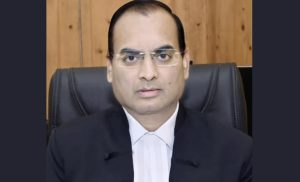
Justice Sanjay Kumar Agrawal was appointed as the 44th regular Chief Justice of the Rajasthan High Court on 5 September 2026. He was serving as a judge of the Chhattisgarh High Court before the appointment, and the Central Government also cleared his name in a wider order that named eight new chief justices for different High Courts in India.
Chief Justice in the Indian High Court System
The Chief Justice is the head of a High Court under Article 217 and Article 223 of the Constitution of India. A High Court exercises jurisdiction over a state or a group of states and Union Territories, and it functions as the highest court at the state level.
Supreme Court Collegium and Judicial Transfers
The Supreme Court Collegium recommends appointments and transfers of judges to the higher judiciary in India. On 31 August 2026, the Collegium recommended Justice Sanjay K. Agrawal for Rajasthan and proposed the transfer of Justice Pushpendra Bhati, the second-most senior judge of the Rajasthan High Court, to the Jammu and Kashmir High Court.
Rajasthan High Court and Acting Chief Justice
The Rajasthan High Court has principal benches at Jodhpur and Jaipur. In August 2026, lawyer associations at both benches launched protests and called for a strike over the functioning of Acting Chief Justice Sanjeev Prakash Sharma, and he later removed himself from judicial sittings scheduled between 1 September and 5 September 2026.
Important Facts for Exams
- Article 223 of the Constitution provides for the appointment of an Acting Chief Justice of a High Court.
- The Chief Justice of a High Court is appointed by the President of India after consultation with the Chief Justice of India and the Governor of the state.
- The Rajasthan High Court was established in 1949 and functions from Jodhpur, with a bench at Jaipur.
- The Supreme Court Collegium is a judicial body that recommends appointments and transfers in the higher judiciary.
High Court Administration
High Courts in India have original, appellate and writ jurisdiction under the Constitution of India. The senior-most judge often performs administrative duties when a regular Chief Justice post falls vacant.
| Related | |
|---|---|


Dr.Cajetan Coelho
September 6, 2026 at 4:16 pmCongratulations to Justice Shri Sanjay Kumar Agrawal Ji.