Malvi Camel Faces Extinction Threat
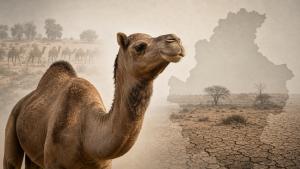
The Malvi camel, also called the white camel, is one of nine recognised camel breeds in India and has been classified as endangered after a sharp population decline recorded in the 2019 livestock census. As of 27 July 2026, only 102 animals remained, and scientists classify camel breeds with fewer than 300 breeding females as at risk.
Malvi Camel: Key Features
The Malvi camel is the smallest camel breed in India and is known for its white coat. It is valued for milk production, and females yield about 4 to 5 kg of milk per cycle. The breed was historically used for transport and for carrying loads.
Distribution and Habitat
The breed is mainly found in the Malwa region of Madhya Pradesh and in parts of Rajasthan. In Madhya Pradesh, its presence is noted in Mandsaur, Neemuch, Ratlam and Gwalior, while in Rajasthan it is found in Kota, Bundi, Jhalawar and Baran.
Conservation Measures
The National Research Centre on Camel has started a scientific breeding programme to increase the Malvi camel population. For pure breeding, the centre procured 12 Malvi camels, including three males and nine females, to preserve the breed’s genetic identity. The conservation work is being carried out under a network project of the National Bureau of Animal Genetic Resources, Karnal. The programme also involves livestock owners and studies on the breed’s characteristics.
Important Facts for Exams
- The Malvi camel is one of nine recognised camel breeds in India.
- The breed is also known as the white camel because of its distinct colour.
- The National Research Centre on Camel is located in Rajasthan.
- The National Bureau of Animal Genetic Resources is based in Karnal, Haryana.
Breed Status in India
Malvi, Mewari and Mewati are among the camel breeds placed in the endangered category because their breeding female population is below 300. Camel breed conservation in India includes scientific breeding, genetic documentation and engagement with livestock rearers.
| Related | |
|---|---|