Rooppur Unit 1 Connects to Bangladesh’s National Grid
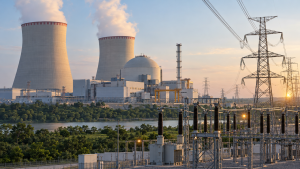
The first unit of the Rooppur Nuclear Power Plant connected to Bangladesh’s national grid on a trial basis on 17 November 2026, making Bangladesh the 33rd country to generate nuclear power. It supplied 350 megawatts at about 3:00 pm local time.
Trial operation of Unit 1
The Nuclear Power Plant Company Bangladesh Limited is conducting the trial with Russia’s Rosatom. The unit is scheduled to supply electricity for 8–10 hours for system-stability monitoring and technical tests. It will then be disconnected for about 28 hours before reconnecting for a further 4–6 hours of operational checks.
Plant capacity and next steps
Located in Ishwardi, Pabna, about 160 km from Dhaka, the plant has two VVER-1200 reactors, each rated at 1,200 MWe, for a combined capacity of 2,400 MWe. Built with Russian technical and financial assistance, the project costs about US$12.65 billion. Unit 1 achieved criticality on 11 October 2026; commercial operation at full capacity is expected in early 2027 after a 10-month trial and Bangladesh Atomic Energy Regulatory Authority approval. Unit 2 is scheduled to become fully operational in 2028. Challenges include completing power ascension and trial operations, strengthening regulatory and nuclear-security frameworks, securing civil-liability coverage, and building grid readiness and operational capacity.
Important Facts for Exams
- Layered safety systems: Rooppur’s VVER-1200/523 units combine active and passive safety systems, with two- to fourfold redundancy across the systems.
- Spent-fuel return: An agreement between Bangladesh and Russia provides for returning spent fuel to Russia for storage, reprocessing, recycling and management of resulting products.
- Whole-plant contract: Rooppur’s EPC contract uses a whole-plant price and covers construction, equipment, initial fuel loading, two reloads, staff training and commissioning.
- Negative void coefficient: Rooppur’s VVER reactors use water as coolant and moderator; if circulation fails, steam bubbles reduce moderation and thereby lower reaction intensity.
| Related | |
|---|---|