Red-Headed Vulture Sighted in Uttarakhand’s Munsiyari
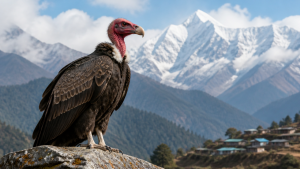
A Red-Headed Vulture (Sarcogyps calvus), classified as Critically Endangered by the International Union for Conservation of Nature (IUCN), was sighted on 5 October 2026 in the Munsiyari area of Pithoragarh district, Uttarakhand. The observation was made at about 2,650 metres above sea level in the forests of Patalthod, between Balati Bend and Munsiyari town.
Sighting and location
A team of bird watchers associated with the Munsiyari-based NGO Monal recorded the bird. The team included Surendra Panwar, Prakash Rana and Kavindra Panwar. Panwar photographed and video-recorded the vulture, providing visual documentation of the sighting. Munsiyari lies in the Kumaon region of Uttarakhand, in the western Himalaya. The bird was observed at an elevation of approximately 8,700 feet. The Pithoragarh Divisional Forest Officer identified it as a Red-Headed Vulture.
Species profile
The Red-Headed Vulture is also known as the Asian King Vulture. It is an Old World vulture and a member of the family Accipitridae. Adults have a bare red head and neck, dark plumage and a prominent body build. The species occurs across parts of the Indian subcontinent and Southeast Asia. Vultures are scavenging birds that feed mainly on animal carcasses. By consuming carcasses, they contribute to the removal of animal remains from the environment. The Red-Headed Vulture’s conservation status is listed as Critically Endangered on the IUCN Red List.
Threats and conservation
The Red-Headed Vulture population declined substantially in past decades. Veterinary diclofenac, used to treat livestock, was a major cause of vulture mortality in South Asia. Vultures that feed on carcasses of treated animals can suffer kidney failure and visceral gout. Habitat loss and reduced food availability have also affected the species. India banned the veterinary use of diclofenac in 2006. Conservation measures for vultures include captive breeding, monitoring populations and reducing exposure to toxic veterinary drugs.
Important Facts for Exams
- The scientific name of the Red-Headed Vulture is Sarcogyps calvus.
- The IUCN classifies the Red-Headed Vulture as Critically Endangered.
- Diclofenac is a non-steroidal anti-inflammatory drug that caused mass mortality among vultures in South Asia.
- Vultures belong to the family Accipitridae and are scavenging birds.
The documented sighting took place in Patalthod forest at approximately 2,650 metres in Pithoragarh district.
| Related | |
|---|---|