Plant Adaptations to Salinity and Drought
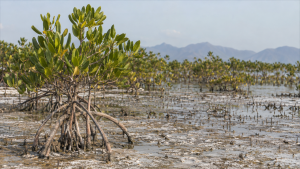
Plants respond to salinity and drought through structural, physiological and biochemical adaptations that help them acquire water, limit its loss and protect cell functions. Halophytes are adapted to salty environments, while xerophytes withstand limited water availability; some adaptations, such as succulence and osmotic adjustment, help with both stresses.
Salinity Stress
Salinity stress occurs when soluble salts, especially sodium chloride (NaCl), accumulate in soil or irrigation water. It is common in coastal, arid and semi-arid regions, and can also result from improper irrigation. Its effects include:
- Osmotic stress: High salt concentration lowers the water potential of the soil solution, making water harder for roots to absorb. This resembles the water deficit caused by drought.
- Ion toxicity: Excess sodium (Na⁺) and chloride (Cl⁻) can accumulate in plant tissues, disrupt cellular processes and damage enzymes.
- Nutritional imbalance: High Na⁺ can interfere with the uptake of essential nutrients such as potassium (K⁺) and calcium (Ca²⁺).
Halophytes: Adaptation to Salinity
Halophytes can grow and complete their life cycle in soils with high salt concentrations. They manage salt by restricting its entry, removing it, isolating it from sensitive tissues or tolerating it within cells.
- Salt exclusion: Some plants limit salt uptake at the roots and reduce its movement to shoots. Certain mangroves use this strategy.
- Salt secretion: Specialised leaf salt glands in plants such as Limonium and Avicennia excrete excess salt onto the leaf surface. It may then be washed away by rain or removed when older leaves fall.
- Salt compartmentalisation: Many halophytes store salt in vacuoles, separating it from sensitive metabolic processes. Some also accumulate it in older leaves, which are later shed. This occurs in some members of the former Chenopodiaceae group.
- Osmotic adjustment: Compatible solutes, including proline, glycine betaine and sugars, help maintain cell turgor and protect cellular structures without disrupting metabolism.
- Succulence: Fleshy leaves or stems store water and dilute accumulated salts. Salicornia is a prominent example.
- Tissue tolerance: Some species tolerate high salt concentrations within their cells.
Examples of halophytes include mangroves such as Rhizophora and Avicennia, and species of Salicornia, Suaeda, Atriplex and Salvadora.
Drought Stress
Drought stress develops when water remains insufficient for plant needs over a prolonged period. It limits growth and agricultural productivity, particularly in arid and semi-arid climates, but can also occur seasonally elsewhere.
- Loss of turgor: Reduced water potential within cells weakens turgor pressure, causing wilting and limiting cell expansion.
- Reduced photosynthesis: Stomata close to conserve water, restricting carbon dioxide uptake and lowering photosynthetic rates.
- Oxidative stress: Water deficit can increase reactive oxygen species (ROS), which may damage cellular components.
Xerophytes: Adaptation to Water Scarcity
Xerophytes survive where water availability is very low. Their adaptations help conserve or acquire water, or allow them to complete growth during brief wet periods.
- Water storage: Succulent stems or leaves store water, as in cacti and other succulents.
- Reduced leaf area: Small, needle-like or absent leaves reduce the surface through which water is lost. Casuarina and Acacia are examples.
- Thick cuticle: A waxy epidermal layer reduces evaporation from plant surfaces.
- Sunken stomata: Stomata recessed into pits or grooves retain humid air nearby, reducing water loss.
- Leaf trichomes: Hairs reflect sunlight and trap humid air, helping limit evaporation.
- Root systems: Deep taproots can reach groundwater; Prosopis cineraria (Khejri) has very deep roots. Extensive shallow roots, by contrast, capture surface rainfall over a wide area.
- Drought escape: Ephemeral annuals complete their life cycle during short wet periods and persist through dry spells as seeds. Seed dormancy similarly delays germination until moisture conditions improve.
- Deciduousness: Shedding leaves during dry seasons reduces water loss.
- CAM photosynthesis: Plants such as cacti and Agave open their stomata at night to take in carbon dioxide, store it as organic acids and close the stomata during the day.
Shared Adaptations and Exam Significance
Some responses help plants cope with both saline and dry conditions because each can reduce water availability to cells. Their effectiveness varies with species and habitat.
- Osmolytes: Proline and glycine betaine help maintain cell turgor under osmotic stress and protect cellular components.
- Antioxidants: Enzymes such as superoxide dismutase and catalase, and compounds such as ascorbic acid and glutathione, help mitigate damage associated with ROS.
- Stress proteins: Heat shock proteins and dehydrins help protect cellular components during severe water deficits.
- Water-use strategies: Succulence, specialised roots and reduced transpiring surfaces illustrate different ways to store, acquire or conserve water.
Water stress is a key challenge for climate adaptation and sustainable agriculture. Understanding plant responses can help explain why particular species persist in saline or dry habitats and inform the selection of crops and vegetation suited to water-limited conditions.
Key Prelims Takeaways
- Halophytes tolerate high soil salinity; xerophytes are adapted to low water availability.
- Osmotic stress is common to salinity and drought, although salinity also causes ion toxicity and nutrient imbalance.
- Halophytes use salt exclusion, secretion, compartmentalisation and tissue tolerance.
- Succulence and osmolyte production can help plants cope with both salinity and drought.
- CAM plants take in carbon dioxide at night, reducing daytime water loss through stomata.
- Salvadora belongs to the family Salvadoraceae. Salvadora persica tolerates salty soils and very low rainfall but prefers access to groundwater.
- The roots and twigs of Salvadora persica are traditionally used as miswak, or chewing toothbrushes.
Recent Context
Salvadora alii was recorded for the first time in Rajasthan, in Jodhpur, Jalore, Bhilwara and Bharatpur districts. Reported on November 17, 2026, as the third Salvadora species in the state’s botanical records, it has white, juicy ripe fruits, unlike the pinkish-red fruits of S. oleoides and S. persica.
| Related | |
|---|---|