Pallava-period Kotravai Sculptures Identified in Villupuram
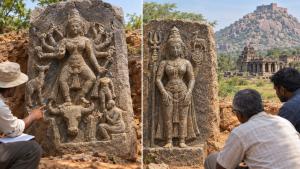
A field survey led by historian K. Senguttuvan identified two eighth-century, approximately 1,200-year-old Pallava-period Kotravai sculptures in Villupuram district, Tamil Nadu. The discovery was reported on 26 February 2026.
Locations and Sculptural Features
One sculpture was found at Kurumbaram near Marakkanam and the other at Mel Sithamur near Gingee. The Kurumbaram sculpture has eight arms and stands on a buffalo head; it also depicts a deer to the left and a headless devotee and a seated worshipper below its feet. The Mel Sithamur sculpture has two hands resting on the thighs, a long trident and a chakra in its rear right hands, and a small deer in the upper left corner.
Survey and Significance
P. Thamizhagan of Pidagam and M. Neelamegan of Puducherry were present during the survey. The findings add evidence that Kotravai worship was prominent and continued for more than a thousand years in Villupuram district.
Important Facts for Exams
- War and fertility: Kotravai was associated with war and victory as well as fertility, agriculture and hunters, giving her worship several distinct dimensions.
- Early Tamil references: Kotravai’s earliest references occur in Tolkappiyam, which the source describes as the earliest work of ancient Sangam literature.
- Blackbuck vehicle: In Tamil Nadu, the blackbuck is considered Kotravai’s vehicle; she is also sometimes depicted riding a lion.
- Warrior offerings: Some Tamil texts describe warrior devotees offering their own heads to Kotravai in a frenzy, linking her worship with martial sacrifice.
| Related | |
|---|---|