New Fungus Species Named After Kolhapur
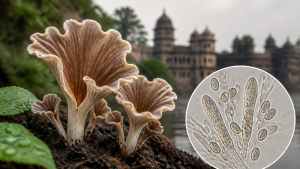
A new polypore fungus species, Microporellus kolhapurensis, was discovered in Bhudargad taluka of Kolhapur district on 27 July 2026. The species was found on rotting wood in the Bediv area on the Ajra border of Bhudargad taluka and was named after Kolhapur.
Discovery and Taxonomy
Microporellus kolhapurensis belongs to the polypore, or bracket fungus, group. Polypores are fungi that usually grow on wood and produce pores on the underside of the fruiting body. The species was identified by Dr Anjali Patil, head of the botany department at Rajaram College, and research scholar Yogesh Patil.
Habitat and Feeding Pattern
The fungus was collected from decaying wood, which is a common substrate for saprotrophic fungi. Saprotrophic fungi obtain nutrition by breaking down dead organic matter, and they play a role in decomposition and nutrient recycling in forest ecosystems. The ground-growing habit of the species places it among wood-decaying fungi that are often studied in forest biodiversity surveys.
Key Morphological Features
The species has a yellowish-orange to greyish-brown, umbrella-shaped fruiting body with a lateral stalk. It also has large pores, teardrop-shaped spores, and thick-walled cystidia. These characters are used in fungal taxonomy for species identification and comparison with related taxa.
Important Facts for Exams
- Polypore fungi are also called bracket fungi because many species form shelf-like fruiting bodies on wood.
- Saprotrophic fungi are decomposers that break down dead plant material and return nutrients to the soil.
- The genus Microporellus has about 36 recognised species globally.
- Microporellus obovatus was the only species of this genus previously recorded from Maharashtra.
Publication and Biodiversity Context
The research findings were published in Nelumbo, the research journal of the Botanical Survey of India. The discovery adds to the documented fungal diversity of Kolhapur district and Maharashtra. Fungal species descriptions usually include habitat, spore shape, pore structure, and cystidia as standard taxonomic characters.
| Related | |
|---|---|