Maharashtra Declares 265 Talukas Drought-Affected
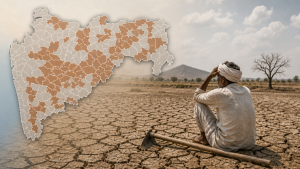
Maharashtra declared 265 of its 358 talukas drought-affected on 26 September 2026. The affected talukas account for about 74% of the state’s total landmass. The declaration followed a rainfall deficit of 18.8% between 1 June and 18 September 2026 and a two-month monsoon break linked with El Niño conditions.
Drought as a Revenue and Administrative Category
In India, drought declaration is an administrative process used by state governments for relief measures under revenue and disaster management provisions. Taluka is a sub-district administrative unit used in several Indian states, including Maharashtra. Drought-affected classification is often based on rainfall shortage, crop condition, water availability, and ground-level field assessment.
Rainfall Deficit and Affected Regions
Districts such as Dharashiv, Beed, Amravati, Solapur, and Latur have recorded severe stress from deficient rainfall. Some areas in these districts received 40% to 50% less rainfall, and several locations received little or no rain since July 2026. El Niño is a periodic warming of the central and eastern tropical Pacific Ocean that can influence monsoon rainfall patterns in India.
Crop Losses and Relief Measures
The drought has affected Kharif crops, which are sown with the onset of the southwest monsoon and harvested in autumn. Major affected crops include soybean, cotton, millet, maize, tur, moong, and urad. The state announced concessions in land revenue, restructuring of crop loans, suspension of agricultural loan recoveries, concessions in electricity bills for agricultural pumps, and waiver of examination fees for students in affected areas.
Important Facts for Exams
- Maharashtra has 358 talukas, and 265 talukas were declared drought-affected in September 2026.
- Kharif crops are generally sown between June and July and harvested between September and October in India.
- El Niño is associated with warming of sea surface temperatures in the equatorial Pacific Ocean.
- The Employment Guarantee Scheme in Maharashtra is linked with rural wage employment and water conservation works.
Water and Livestock Support Measures
The state planned drinking water tanker deployment, fodder supply for livestock, relaxation of norms under the Employment Guarantee Scheme, and large-scale water conservation works. These measures are commonly used in drought management in rural India.
| Related | |
|---|---|