Kashmir Rice Varieties Retain Climate-Adaptation Genes
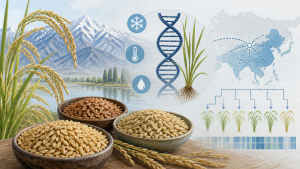
A study by researchers at Sher-e-Kashmir University of Agricultural Sciences and Technology (SKUAST-Kashmir), Srinagar, found that Kashmir’s traditional rice varieties have a distinct genetic history. Published in The Plant Genome, the study found that they carry cold-tolerance and other locally adapted genes that modern varieties have partly lost.
Genetic links and climate adaptation
Genetic analysis indicated that the traditional varieties are more closely related to rice varieties from the Korean Peninsula and Northeast China. The researchers said these varieties may be valuable as climate change increases stress on crops.
Important Facts for Exams
- Domestication lineage: Asian rice’s indica and japonica forms derive from a single domestication in China from wild Oryza rufipogon; indica later arose through hybridisation.
- Stage-specific cold response: Rice cold tolerance is stage-specific: germination, seedling growth and reproductive fertility are partly distinct traits, so screening at one stage may not predict another.
- COLD1 signalling: In japonica rice, COLD1 contributes to chilling tolerance by linking cold perception with G-protein signalling and calcium influx.
- Orthodox seed storage: Rice seeds are orthodox: they tolerate drying and low-temperature storage, allowing long-term preservation in seed genebanks.
Originally written on
October 31, 2026
and last modified on
October 31, 2026.
| Related | |
|---|---|