ICAR-CRRI and JSW JFE Steel sign MoU on EcoLime+ for acidic soils and potential DAP reduction
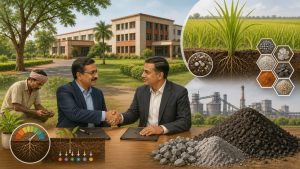
The ICAR-Central Rice Research Institute (ICAR-CRRI), Cuttack, and JSW JFE Steel Limited signed a memorandum of understanding on 30 October 2026 to promote agricultural use of industrial by-products. The collaboration will focus on improving acidic soils with EcoLime+, a product developed by ICAR-CRRI.
EcoLime+ and soil health
EcoLime+ combines compost with industrial by-products, including steel slag and fly ash. It contains plant-beneficial nutrients such as calcium, magnesium, phosphorus, silicon, potassium and zinc. The collaboration aims to improve soil health and support more efficient use of industrial waste in agriculture.
By improving phosphorus availability and nutrient-use efficiency in acidic soils, EcoLime+ may reduce the requirement for diammonium phosphate (DAP) fertiliser by about 10–15%. This is a potential reduction, not a confirmed outcome. The MoU was signed by ICAR-CRRI Director G.A.K. Kumar and JSW JFE Steel Limited Managing Director and Chief Executive Officer Umesh Rai.
Important Facts for Exams
- Ferrous-slag conditioning: Ferrous slags have been used to adjust soil pH and supply calcium and magnesium as fertiliser nutrients.
- Phosphate binding in acidic soils: In strongly acidic soils, iron and aluminium oxides can bind phosphate; liming reduces aluminium toxicity and often increases the fraction available to plants.
- Fly-ash classification: ASTM C618 classifies coal fly ash as Class F or Class C, distinguishing them chiefly by chemistry and self-cementing properties.
- DAP nutrient grade: Commercial diammonium phosphate is commonly graded 18-46-0, denoting nitrogen, phosphate and potash percentages; it supplies no potassium.
| Related | |
|---|---|