Iron Age Remains and Steel Sword Found Near Mettur
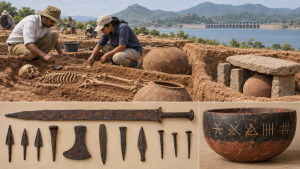
Excavations by the Tamil Nadu Department of Archaeology at Thelunganur and Mangadu, near Mettur Dam in Salem district, have uncovered human remains and iron objects. The findings were reported on July 14, 2026.
Remains and artefacts
The excavations yielded complete skeletal remains of two Iron Age individuals. Finds include a 1.9-metre spear, arrowheads, axes, swords, daggers, knives and nails. A steel sword from Thelunganur is generally dated to around 1200 BCE. Large burial urns and pit, cist and sarcophagus burials were also identified.
Dating and other finds
The sites are generally dated to 1600–1200 BCE. Scientific dates from sites in Tamil Nadu, including Thelunganur and Mangadu, suggest that iron technology in the region may date to the first quarter of the 4th millennium BCE, about 5,300 years ago. Black-and-red ware bowls bearing five graffiti symbols were also found; scholars consider them possible clues to an early writing system dating back more than 3,200 years. The Archaeological Survey of India approved the excavations in March 2026 as part of the state department’s 2025–2026 projects.
Important Facts for Exams
- Black-and-red ware firing: Black-and-red ware was commonly made by controlling oxygen during firing: reducing conditions blackened one surface, while oxidation turned the other red.
- Bloomery iron production: Ancient bloomery smelting did not melt iron fully; charcoal reduced ore to a porous solid bloom, which smiths consolidated through repeated hot-forging.
| Related | |
|---|---|