Bengaluru Doctors Perform Three Heart Transplants After Mechanical Support
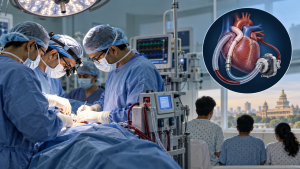
Doctors at Narayana Health in Bengaluru performed heart transplants on three young patients after supporting them with ventricular-assist devices while they awaited donor organs.
Mechanical support before transplantation
The three patients received ventricular-assist device support for 28 to 45 days. One required a biventricular-assist device, which supported both sides of the heart, for 45 days. Another patient, whose heart muscle had become stretched and weak, received pump support for 28 days before transplantation.
Patient cases and clinical team
The third patient, a childhood cancer survivor who had previously lost a kidney, developed heart failure and received artificial-pump support for 30 days before a successful transplant. The clinical team included Dr. Shashiraj Subramanya H S, Head of Paediatric Cardiology; Dr. Varun Shetty, Senior Consultant in Cardiac Surgery; and Dr. Riyan Sukumar Shetty, Director of Paediatric Intensive Care.
Important Facts for Exams
- Ventricle-based types: VAD configuration is classified by the ventricle supported: left (LVAD), right (RVAD) or both (BiVAD), and by intended duration of use.
- Treatment role: VAD support can aid short-term recovery or provide long-term support as a bridge to transplantation or as destination therapy.
- Pump operation: VAD pumps are either pulsatile, mimicking the heart’s natural pulsing action, or continuous-flow, providing blood flow without that pumping pattern.
- Rotor geometry: In centrifugal pumps, rotors move blood towards the outer rim; axial-flow pumps use helical blades to propel blood along the rotor’s axis.
| Related | |
|---|---|