Indian scientists develop placenta-on-chip platform
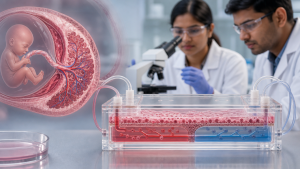
Indian researchers from Mumbai have developed a lab-grown placenta-on-chip platform that recreates key placental functions. The device is linked to pregnancy research, drug testing, and reduced dependence on animal models in biomedical studies.
Placenta-on-chip: basic concept
The placenta-on-chip is a microfluidic device that models the human placenta in a controlled laboratory setting. The placenta is an organ that transfers oxygen and nutrients from the mother to the foetus and removes waste products from foetal blood.
Research institutions and collaborators
The work involves IIT Bombay and the Indian Council of Medical Research’s National Institute for Research in Reproductive and Child Health, also known as NIRRCH, in Parel, Mumbai. The project includes Prof. Abhijit Majumder from the Department of Chemical Engineering, Prof. Debjani Paul from the School of Biosciences and Bioengineering, and Dr. Deepak Modi from NIRRCH.
Technical features and applications
The devices were built using photolithography and soft lithography, which are standard fabrication methods in microengineering. The platform is designed to mimic the placenta as a gatekeeper that controls nutrient transfer and blocks harmful substances. The models are also intended for testing medicines for the pharmaceutical industry and for studying pregnancy-related conditions such as preeclampsia and gestational diabetes.
Important Facts for Exams
- The placenta is a temporary organ that develops during pregnancy in mammals, including humans.
- Preeclampsia is a pregnancy disorder associated with high blood pressure and organ-related complications.
- Gestational diabetes is a form of diabetes first diagnosed during pregnancy.
- Microfluidic organ-on-chip systems are used to simulate human organ functions in laboratory conditions.
Patent and research support
The patent filing for the placenta-on-chip technology is under process. The project received support from IMPRINT II C of the Science, Engineering, and Research Board, or SERB.
| Related | |
|---|---|