India Reaffirms Hepatitis B, C Elimination Goal for 2030
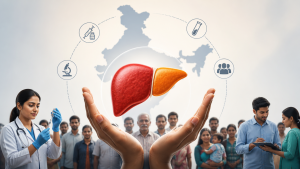
India has set a target to eliminate Hepatitis B and Hepatitis C as public health threats by 2030. The commitment is linked to the National Viral Hepatitis Control Programme (NVHCP), which was launched in 2018 and aligns with Sustainable Development Goal 3.3 on ending major communicable diseases.
National Viral Hepatitis Control Programme
The NVHCP is a national public health programme for prevention, screening, diagnosis, treatment, and awareness related to viral hepatitis. It provides free services for Hepatitis B and Hepatitis C through district hospitals and other public health facilities.
- The NVHCP was launched in 2018 as a people-centred health strategy.
- The programme covers screening, diagnosis, treatment, and referral services.
- The programme uses public health facilities to expand access to hepatitis care.
Hepatitis B and C in Public Health
Hepatitis B and Hepatitis C are viral infections that affect the liver and can lead to chronic liver disease, cirrhosis, and liver cancer. Hepatitis B can spread from mother to child during childbirth, through infected blood, and through unsafe injections or unprotected sexual contact.
Hepatitis C mainly spreads through infected blood and unsafe medical procedures. Hepatitis B has a vaccine, while Hepatitis C does not have a vaccine and is treated with antiviral medicines.
Screening, Vaccination, and Treatment Measures
India follows universal screening of pregnant women for Hepatitis B. Newborns receive a Hepatitis B birth dose within 24 hours of birth under the Universal Immunisation Programme, followed by additional doses at 6, 10, and 14 weeks.
The programme also uses affordable generic medicines for Hepatitis B and C treatment. As of 28 July 2026, the NVHCP had screened over 21 crore beneficiaries and provided treatment to about 6.12 lakh patients across 1,153 treatment sites.
Important Facts for Exams
- World Hepatitis Day is observed on 28 July every year.
- Hepatitis B vaccine is included in India’s Universal Immunisation Programme.
- Hepatitis C has no vaccine, but it is curable with antiviral treatment.
- Sustainable Development Goal 3.3 covers the fight against communicable diseases by 2030.
Integration with Other Health Programmes
India’s hepatitis response is linked with the Reproductive, Maternal, Newborn, Child, Adolescent Health and Nutrition programme, the National AIDS Control Programme, the National Tuberculosis Elimination Programme, and Blood Transfusion Services. These linkages support screening and referral across multiple public health platforms.
Union Health Secretary Punya Salila Srivastava reaffirmed the 2030 elimination target at a United Nations General Assembly side event in New York on 23 September 2026. Union Minister of State for Health and Family Welfare Anupriya Patel urged states and Union Territories to intensify awareness on transmission, testing, and treatment in July 2026.
| Related | |
|---|---|