India Lifts Export Ban on Wheat Flour Products
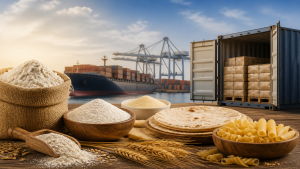
India changed the export policy for wheat, durum wheat and related wheat flour products from “Prohibited” to “Free” with immediate effect on 24 August 2026. The order covers maida, semolina, wholewheat atta and resultant atta, and it ends restrictions that had remained in force since 13 May 2022 for wheat and since August 2022 for wheat flour products.
Export Policy for Wheat and Wheat Products
The Directorate General of Foreign Trade issues notifications under India’s foreign trade framework. In export policy terms, “Prohibited” means exports are not allowed, while “Free” means exports can take place without a specific ban, subject to other applicable laws and procedures.
Wheat is a major cereal crop in India, and durum wheat is a hard wheat variety used in products such as pasta and some flour blends. Maida is refined wheat flour, semolina is also called rava or suji, and atta is wholewheat flour used for chapatis and other flatbreads.
Domestic Supply and Production Context
The policy change followed a record foodgrain output of 376.563 million tonnes in the 2025-26 crop year. India’s wheat policy has often been linked to domestic availability, public distribution requirements and retail price management.
The earlier restrictions were introduced in 2022 during global food market disruption after the Russia-Ukraine war. India has a population of about 1.4 billion people, and wheat is one of the main staples in the northern and central parts of the country.
Earlier Relaxation and Trade Destinations
In February 2026, the Centre allowed limited exports of 25 lakh metric tonnes of wheat and 5 lakh metric tonnes of wheat products. The new decision removes the cap for the covered products and restores wider overseas trade in processed wheat commodities.
India’s wheat flour exports have traditionally moved to markets in South Asia and the Middle East. Flour mills use wheat as the main raw material, and export access affects capacity utilisation in the milling sector.
Important Facts for Exams
- The Directorate General of Foreign Trade is the authority that issues India’s export and import policy notifications.
- Maida, semolina and atta are all wheat-based products, but they differ in processing and grain texture.
- India is one of the world’s largest producers and consumers of wheat.
- Export restrictions on wheat were first imposed in May 2022.
India’s foodgrain production in 2025-26 was 376.563 million tonnes. The policy change applies immediately to wheat, durum wheat and specified wheat flour products.
| Related | |
|---|---|