India Concludes Eighth Trade Policy Review at WTO
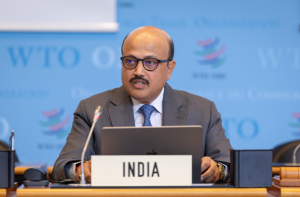
India concluded its Eighth Trade Policy Review at the World Trade Organization in Geneva on 24 July 2026. The review sessions were held on 21 July and 23 July 2026, and the exercise covered India’s trade policies from 1 January 2021 to 31 December 2025.
Trade Policy Review at the WTO
The Trade Policy Review Mechanism is one of the WTO’s three core functions, along with trade negotiations and dispute settlement. It examines the trade and related policies of WTO members on a regular basis. India is a founding member of the WTO, which came into force on 1 January 1995.
India’s Participation and Key Figures
Commerce Secretary Rajesh Agrawal led the Indian delegation during the review. India received 1,094 written questions from 44 WTO members, and 68 members made interventions across the two sessions. WTO members also noted India’s acceptance of the WTO Agreement on Fisheries Subsidies, which was adopted at the 12th WTO Ministerial Conference in June 2022.
Policy Areas Discussed
Members discussed India’s Digital Public Infrastructure, customs modernisation, trade facilitation, and the integration of Micro, Small and Medium Enterprises into global value chains. Some members also raised concerns about the Production Linked Incentive scheme, tariffs, Quality Control Orders, import substitution policies, and the frequent use of trade remedies.
Important Facts for Exams
- The WTO headquarters is located in Geneva, Switzerland.
- The Trade Policy Review Mechanism was established under the Marrakesh Agreement in 1995.
- The WTO Agreement on Fisheries Subsidies was adopted in 2022 and deals with harmful fishing subsidies.
- Micro, Small and Medium Enterprises are classified in India under the Micro, Small and Medium Enterprises Development Act, 2006.
Trade Performance and Structural Issues
India’s total merchandise and services exports reached US$ 863.1 billion in fiscal year 2025-26. This was 6.3% higher than the level in fiscal year 2021-22. The WTO Secretariat report referred to structural issues such as high trade costs, regulatory complexity, infrastructure gaps, and barriers to deeper global integration in the context of India’s Viksit Bharat vision for 2047.
| Related | |
|---|---|