Important Supreme Court Environmental Judgments
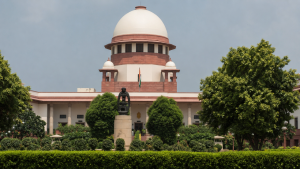
The Supreme Court of India has played a proactive role in strengthening environmental jurisprudence by linking environmental protection with fundamental rights, especially Article 21. Over time, it has evolved key doctrines such as absolute liability, the precautionary principle, polluter pays, and public trust.
| Case Name and Year | Key Principle or Outcome |
| M.C. Mehta v. Union of India (1987) | Formulated the Absolute Liability Principle for hazardous industries. |
| Subhash Kumar v. State of Bihar (1991) | Declared that Article 21 includes the right to pollution-free water and air. |
| Vellore Citizens Welfare Forum v. Union of India (1996) | Integrated the Precautionary Principle and the Polluter Pays Principle into Indian law. |
| T.N. Godavarman Thirumulpad v. Union of India (1996) | Expanded the definition of forest to its dictionary meaning and established structural forest protection. |
| M.C. Mehta v. Kamal Nath (1997) | Applied the Public Trust Doctrine to natural resources. |
| M.K. Ranjitsinh v. Union of India (2024 & 2025) | Established the fundamental right against the adverse effects of climate change; balanced wildlife protection with green energy. |
| Vanashakti v. Union of India (2025) | Declared ex-post facto environmental clearances illegal. |
| Delhi Pollution Control Committee v. Lodhi Property Co. Ltd. (2025) | Confirmed the power of Pollution Control Boards to levy compensatory damages. |
Core Legal Doctrines Established by the Court
Absolute Liability Principle
- Case Reference: M.C. Mehta v. Union of India (1987) (also known as the Oleum Gas Leak Case).
- The Ruling: The Supreme Court departed from the traditional English law principle of strict liability.
- Key Details: An enterprise engaged in inherently dangerous or hazardous activity owes an absolute duty to safeguard the public. If harm occurs, it is liable to compensate all affected parties. No exceptions or defenses are permitted.
The amount of compensation must be linked to the size and financial capacity of the enterprise so that it acts as a deterrent.
Precautionary Principle and Polluter Pays Principle
- Case Reference: Vellore Citizens Welfare Forum v. Union of India (1996).
- The Ruling: The court held that both principles are essential parts of sustainable development in India.
- Precautionary Principle Details: Environmental measures must anticipate, prevent, and attack the causes of environmental degradation. Lack of scientific certainty should not delay cost-effective measures.
- Polluter Pays Principle Details: Liability extends not only to compensating victims but also to restoring environmental degradation.
The court directed tanneries in Tamil Nadu to pay compensation to affected farmers and fund restoration of local water bodies.
Public Trust Doctrine
- Case Reference: M.C. Mehta v. Kamal Nath (1997).
- The Ruling: The Supreme Court imported the Roman law concept of the Public Trust Doctrine into Indian environmental jurisprudence.
- Key Details: Natural resources such as air, sea, waters, and forests are of such public importance that private ownership is unjustified. The State is the trustee of all natural resources and must protect them for public use.
Fundamental Rights and the Environment
Right to Pollution-Free Water and Air
- Case Reference: Subhash Kumar v. State of Bihar (1991).
- The Ruling: The court declared that the right to a pollution-free environment is part of the right to life under Article 21.
- Key Details: Article 21 includes the enjoyment of pollution-free water and air. A citizen can invoke Article 32 to seek removal of pollution threatening health or life.
Right Against the Adverse Effects of Climate Change
- Case Reference: M.K. Ranjitsinh v. Union of India (2024 & 2025).
- The Ruling: In March 2024, the Supreme Court recognized a distinct fundamental right to be free from the adverse effects of climate change under Article 21 and Article 14.
- Context: The case began as a petition to protect the critically endangered Great Indian Bustard and Lesser Florican from overhead power transmission lines in Rajasthan and Gujarat.
- The 2024 Ruling: Clean energy transition is necessary to fight climate change, but it must not destroy endangered species.
- The 2025 Settlement: The court finalized a balanced framework with revised priority areas for core GIB protection while permitting sustainable renewable energy projects with protective measures.
Key Resource and Habitat Protection Decisions
Forest Protection and the Dictionary Meaning
- Case Reference: T.N. Godavarman Thirumulpad v. Union of India (1996).
- The Ruling: The Supreme Court took control of forest administration to stop deforestation.
- Key Details: The Forest (Conservation) Act, 1980, applies to all forest lands, regardless of ownership or classification in government records. The term “forest” must be understood according to its dictionary meaning.
Any non-forest activity within a forest area requires prior clearance from the Central Government.
- Additional Fact: This ongoing case led to the creation of CAMPA, which manages compensatory afforestation funds.
Protection of the Taj Mahal and Cultural Heritage
- Case Reference: M.C. Mehta v. Union of India (1996) (also known as the Taj Trapezium Case).
- The Ruling: The court acted to protect the Taj Mahal from industrial emissions.
- Key Details: Acid rain from coal-based industries was yellowing the white marble of the Taj Mahal. Industries in the Taj Trapezium Zone had to shift to cleaner fuel such as Compressed Natural Gas or relocate outside the zone.
Administrative and Regulatory Directives
Mandatory Environmental Clearances
- Case Reference: Vanashakti v. Union of India (2025).
- The Ruling: The Supreme Court declared that ex-post facto environmental clearances are illegal.
- Key Details: Starting a project first and seeking clearance later violates environmental protection principles. Clearances must be obtained before construction or operations begin.
This ruling reinforces the Precautionary Principle.
Powers of Pollution Control Boards
- Case Reference: Delhi Pollution Control Committee v. Lodhi Property Co. Ltd. (2025).
- The Ruling: The court confirmed that Pollution Control Boards can levy and collect compensatory or restitutionary damages.
- Key Details: The judgment distinguished punitive fines from civil compensatory damages. Pollution control committees can impose compensatory charges to restore environmental damage.
Recent Context
On August 24, 2026, the Supreme Court ordered an interim ban on construction within 100 metres of Rajasthan’s Jojari River and restricted hazardous activity near its flood line. The directions were issued in a suo motu case on industrial pollution affecting western Rajasthan.
Rare Facts for Prelims
- Article 21: Environmental rights in India are largely read into the right to life through judicial interpretation.
- Oleum Gas Leak Case: The absolute liability principle emerged after the gas leak incident involving hazardous industry operations in Delhi.
- CAMPA: The Compensatory Afforestation Fund is used for afforestation and related ecological restoration works.
- Public Trust Doctrine: Under this doctrine, the State cannot act as an ordinary owner of key natural resources.
- Polluter Pays: The principle covers both victim compensation and the cost of environmental restoration.
- High Flood Line: It is an important benchmark in river management used to assess flood risk and buffer planning.
| Related | |
|---|---|