Important Agricultural Missions and Schemes of India
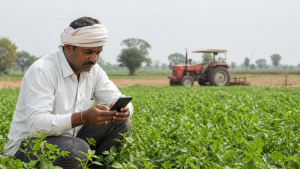
India’s agriculture support system rests on a mix of income support, concessional credit, procurement assurance, and investment in post-harvest infrastructure. These measures are aimed at lowering farmer risk, improving market access, and encouraging technology-led growth in the farm sector.
Institutional Outlay and Fiscal Allocations
- Ministry of Agriculture and Farmers Welfare: Allocated ₹1,40,529 crore in the Union Budget 2026–27, a 5.4% increase over the previous year’s revised estimates.
- Department of Agriculture and Farmers Welfare: Receives ₹1,30,561 crore within the ministry.
- Department of Agricultural Research and Education: Allocated ₹9,967 crore for research and education support.
- Department of Animal Husbandry and Dairying: Receives ₹6,153.46 crore to support livestock health and dairy management.
- Fertiliser subsidies: The budget provides ₹1,70,944 crore to ease input costs and protect farmers from price shocks.
Income Support and Credit Interventions
- PM-KISAN: The Pradhan Mantri Kisan Samman Nidhi receives ₹63,500 crore in FY 2026–27.
- Direct income support: The scheme provides ₹6,000 per year to landholding farmer families through direct benefit transfer.
- 23rd instalment: The 23rd DBT instalment was released to registered farmers on June 20, 2026.
- Modified Interest Subvention Scheme (MISS): Allocated ₹22,600 crore for short-term crop loans up to ₹3 lakh at subsidised interest rates.
- Purpose of MISS: The scheme supports affordable farm credit and reduces dependence on costly informal borrowing.
- Agriculture Infrastructure Fund (AIF): The ₹1 lakh crore central sector scheme remains operational from 2020–21 to 2032–33 and has received a temporary extension for disbursement and execution beyond March 31, 2026.
PM-AASHA and Price Support Mechanisms
- PM-AASHA: The Pradhan Mantri Annadata Aay SanraksHan Abhiyan is extended through the 15th Finance Commission Cycle up to 2025–26 with a total outlay of ₹35,000 crore.
- FY 2026–27 allocation: The scheme receives ₹7,200 crore for procurement and price protection operations.
- Umbrella structure: PM-AASHA converges the Price Support Scheme (PSS), Price Stabilization Fund (PSF), Price Deficit Payment Scheme (PDPS), and Market Intervention Scheme (MIS).
- Procurement support: The central government has raised the credit guarantee to ₹45,000 crore for procurement of notified pulses, oilseeds, and copra.
- Pulses procurement: Tur (Arhar), Urad, and Masur receive a 100% procurement guarantee under the PSS component.
Tech Integration and Infrastructure Funds
- Bharat-VISTAAR: The Union Budget 2026–27 introduces Bharat-VISTAAR, a multilingual GenAI-based platform to integrate AgriStack portals and agricultural practices.
- Initial allocation: The platform is provided ₹150 crore.
- AIF financial support: Under the Agriculture Infrastructure Fund, eligible borrowers get a 3% interest subvention and credit guarantee on loans up to ₹2 crore.
- Loan tenure: The maximum tenure under AIF is 7 years.
- Eligible projects: AIF supports post-harvest management infrastructure such as cold chains, warehouses, sorting units, and e-trading platforms.
- Implementing institutions: Cooperatives, farmer producer organisations, and agri-entrepreneurs can develop such projects.
High-Value Cultivation and Allied Sectors
- High-value crops: The budget allocates ₹350 crore to promote coconut, sandalwood, cocoa, cashew, agarwood, walnuts, and almonds.
- Coconut Promotion Scheme: This is part of the high-value crop support package.
- Indian Cashew and Cocoa program: A dedicated programme has been initiated to make India self-reliant in processing and exports by 2030.
- National Fibre Scheme: Proposed to achieve self-reliance in natural, man-made, and new-age fibres.
- Fisheries support: The budget also includes a programme for integrated development of 500 reservoirs and Amrit Sarovars.
Key Prelims Takeaways
- PM-KISAN: A direct income support scheme giving ₹6,000 annually to eligible landholding farmer families.
- MISS: Provides short-term crop loans up to ₹3 lakh at subsidised interest rates.
- AIF: A ₹1 lakh crore fund for post-harvest infrastructure, with support for loans up to ₹2 crore.
- PM-AASHA: An umbrella mechanism covering PSS, PSF, PDPS, and MIS for price support.
- Pulses procurement: Tur, Urad, and Masur enjoy 100% procurement guarantee under PSS.
- Bharat-VISTAAR: A multilingual GenAI-based platform aimed at integrating agricultural digital systems.
- High-value crops: Coconut, cashew, cocoa, sandalwood, and other specialty crops receive dedicated policy attention.
Current General Studies comprises current-affairs-based, General Studies-rich study material on policies, laws, institutions, economy, science, environment, governance, international relations, and other varied but important topics for UPSC and State PSC Prelims examinations.
Fortnightly PDF compilations: Available here
Originally written on
March 4, 2026
and last modified on
September 5, 2026.
| Related | |
|---|---|