Grey Hornbill returns to Gujarat’s Gir forests after six decades
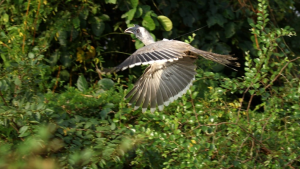
The Indian Grey Hornbill, also known as Chilotro, has been reintroduced into the Gir forests of Gujarat after an absence of more than six decades. A scientific study in the peer-reviewed journal Birds records that the reintroduced birds are surviving and breeding in the wild.
Indian Grey Hornbill
The Indian Grey Hornbill is a bird species found in parts of the Indian subcontinent. Hornbills belong to the family Bucerotidae, which includes large birds with a distinctive curved bill and a casque on the upper mandible.
Gir Landscape and Reintroduction Programme
The Gir landscape in Gujarat is known for the Gir National Park and Wildlife Sanctuary, which is the only natural habitat of the Asiatic lion in India. The reintroduction programme released 40 hornbills in two phases, with 28 birds in 2021-2022 and 12 birds in 2023. Eleven male hornbills were fitted with satellite transmitters to track movement, habitat use, and breeding behaviour. Two tagged males were named LK and RSD in memory of ornithologists Lavkumar Khachar and R.S. Dharmakumarsinhji.
Breeding and Monitoring
One breeding pair nested in the first year after release, and three more breeding pairs nested in the second year. The study title is “Reintroduction of Indian Grey Hornbills in Gir, India: Insights into Ranging, Habitat Use, Nesting and Behavioural Patterns”.
Important Facts for Exams
- The Indian Grey Hornbill belongs to the family Bucerotidae.
- Gir National Park in Gujarat is the only natural habitat of the Asiatic lion in India.
- Satellite transmitters are used in wildlife studies to track movement and habitat use.
- Lavkumar Khachar and R.S. Dharmakumarsinhji were noted Indian ornithologists associated with bird studies in Gujarat.
Conservation Context
Reintroduction is a wildlife conservation method used to restore a species to parts of its former range. The Gir hornbill project is an example of a species returning to a habitat where it had become locally extinct.
| Related | |
|---|---|