Government Launches National Technothon by NIOT
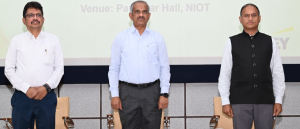
The National Institute of Ocean Technology (NIOT), an autonomous institute under the Ministry of Earth Sciences, launched a National Technothon on 3 August 2026. The initiative seeks technologies for the sustainable collection of deep-sea polymetallic nodules and supports India’s Deep Ocean Mission.
National Institute of Ocean Technology
NIOT was established in 1993 in Chennai and functions under the Ministry of Earth Sciences. The institute works on ocean technology, marine engineering, and deep-sea systems for Indian conditions.
Deep-sea Polymetallic Nodules
Polymetallic nodules are potato-shaped mineral concretions found on the deep ocean floor. They contain nickel, cobalt, copper, and manganese, which are used in electric vehicles, renewable energy systems, and advanced batteries.
Technothon Design and Participation
The Technothon invites start-ups, industries, MSMEs, academic institutions, research organisations, innovators, and multidisciplinary teams. The challenge covers operating conditions at depths of 4,500 to 6,000 metres in the ocean.
- One category is titled “Innovative Impact-Less Nodule Collection System with Vertical Riser Transport”.
- The second category is titled “Innovative Impact-Less Nodule Collection System without Vertical Riser”.
- The challenge focuses on indigenous engineering solutions for deep-ocean resource development.
Important Facts for Exams
- The Deep Ocean Mission is an Indian government programme linked to deep-sea exploration and technology development.
- Polymetallic nodules are also called manganese nodules in oceanography.
- Nickel and cobalt are key minerals used in lithium-ion battery chemistry.
- The Blue Economy refers to the sustainable use of ocean resources for economic activity.
Deep Ocean Mission and Blue Economy
The Deep Ocean Mission is associated with India’s efforts in ocean exploration, marine resource assessment, and underwater technology. The Blue Economy includes fisheries, marine transport, offshore energy, seabed resources, and coastal livelihoods. India has a long coastline of about 7,516.6 kilometres. The Indian Ocean region is important for marine science, seabed minerals, and strategic ocean research.
| Related | |
|---|---|