Government issues draft CAFE III norms
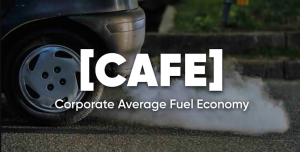
The Government of India released the draft Corporate Average Fuel Economy (CAFE) III norms on 16 July 2026. The draft applies to M1 category passenger vehicles manufactured or imported for sale in India during 2027-28 to 2031-32.
Corporate Average Fuel Economy framework
Corporate Average Fuel Economy is a regulatory framework for measuring the average fuel efficiency of vehicles sold by a manufacturer. In India, the framework is used for passenger vehicles under the M1 category, which includes vehicles used for carrying passengers and having not more than eight seats in addition to the driver’s seat. CAFE norms are issued in stages, and CAFE-III is proposed to follow CAFE-II. The draft states that CAFE-III will take effect from 1 April 2027, while CAFE-II is scheduled to end on 31 March 2027.
Proposed fuel-efficiency targets
The draft proposes progressively tighter fuel-consumption targets for the compliance period. The target is 3.996 litres per 100 km, or 94.76 gCO₂/km, in 2027-28, and 3.3273 litres per 100 km, or 78.90 gCO₂/km, in 2031-32. The norms are designed for passenger vehicles sold in India and are linked to declared tailpipe carbon dioxide emissions. The compliance framework uses carbon dioxide values as the main metric for fuel-efficiency assessment.
Compliance mechanism and technology incentives
The draft introduces a market-based compliance mechanism for manufacturers. A manufacturer that misses the prescribed target can trade fuel-efficiency credits or purchase them from the Bureau of Energy Efficiency. The draft also provides technology incentives for approved fuel-saving technologies. Manufacturers can claim compliance benefits of up to nine gCO₂/km, with a maximum benefit of one gCO₂/km for each technology. The proposed BEE credit buyout price starts at ₹2,500 per gram of CO₂/km in FY28 and rises annually to ₹4,500 by FY32.
Important Facts for Exams
- The Bureau of Energy Efficiency is the statutory agency associated with energy efficiency measures in India.
- M1 category vehicles are passenger vehicles with not more than eight seats in addition to the driver’s seat.
- CAFE norms use fleet-average fuel consumption and carbon dioxide emission values for compliance.
- Ethanol, bio-fuel and compressed bio-gas are recognised in the draft for carbon-neutrality adjustments in compliance assessment.
Public consultation and policy timeline
The Ministry of Power has invited suggestions and feedback on the draft norms until 6 August 2026. The consultation period is part of the rule-making process for the proposed CAFE-III framework.
| Related | |
|---|---|