Drosicha turkistanica Raises Quarantine Concerns in Jammu & Kashmir
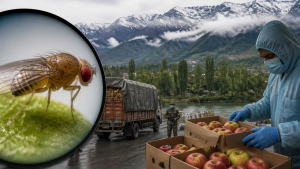
Drosicha turkistanica, an invasive sap-sucking insect, has been identified in poplar and willow plantations in Hanjipora in Pulwama district and in parts of South Kashmir, including Kulgam and Anantnag. The specimen was scientifically identified by the National Bureau of Agricultural Insect Resources in Bengaluru after field samples were collected from the Mountain Research Centre for Field Crops in Khudwani.
Taxonomy and Identification
Drosicha turkistanica belongs to the order Hemiptera and the family Monophlebidae. Hemiptera includes true bugs, aphids, cicadas, leafhoppers, and scale insects, and many members of this order feed on plant sap through piercing and sucking mouthparts.
Host Plants and Infestation Pattern
The pest has been found on poplar and willow trees, which are widely grown in Kashmir for timber, plywood, and farm forestry. Farmers first noticed snow-white, cotton-like masses on tree trunks nearly two years ago, and the infestation was initially mistaken for a fungal infection.
Biosecurity, Quarantine, and Control
Horticultural authorities have linked the entry of the pest to imported planting material, a common pathway for invasive insects and plant pathogens. Quarantine measures for nursery stock, inspection of planting material, and expert diagnosis are standard plant protection tools used to limit the spread of invasive species.
Scientists have warned that the pest has high reproductive potential and can weaken trees through prolonged sap feeding. Agricultural experts have also advised against indiscriminate pesticide use, because incorrect spraying can damage the environment and may not control the pest effectively.
Important Facts for Exams
- Hemiptera is an order of insects that includes aphids, cicadas, leafhoppers, and scale insects.
- Monophlebidae is a family of scale insects, many of which are plant-feeding pests.
- Poplar and willow are important plantation trees in Kashmir and are used in timber-related activities.
- Quarantine of nursery stock is a standard measure to prevent the spread of invasive pests and diseases.
Economic and Ecological Context
Poplar and willow plantations support rural livelihoods in South Kashmir, where many families depend on slow-maturing tree crops. The spread of sap-sucking pests in young plantations can affect tree growth, plantation survival, and farm forestry output.
| Related | |
|---|---|