Dispatchable Power Sources and Renewable Energy Integration in India
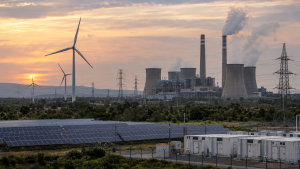
Reliable electricity systems need power sources that can respond when demand changes or renewable generation falls. In India, dispatchable generation, energy storage and stronger transmission networks are important to maintaining grid stability while integrating more solar and wind power.
Dispatchable Power Sources
Dispatchable sources can be switched on or off, or have their output adjusted, in response to grid requirements or market signals. They help balance supply and demand, meet peak loads and manage fluctuations in variable renewable generation.
- Thermal power: Coal, natural gas and diesel plants can provide controllable generation. Coal plants traditionally supply baseload power, while gas-fired plants can start and ramp up or down more quickly, making them useful for balancing the grid.
- Hydropower: Reservoir-based plants can respond rapidly to changes in demand. Pumped Hydro Storage (PHS) stores electricity by pumping water to an upper reservoir and generates power when water flows back through turbines.
- Nuclear power: Provides continuous baseload electricity but is generally less suited to rapid changes in output.
- Battery Energy Storage Systems (BESS): Store surplus electricity and discharge it when needed. Their fast response can support short-term balancing and grid stability.
India’s Renewable Energy Landscape
India’s 2030 goals include 500 GW of installed electricity capacity from non-fossil fuel sources and a 50% non-fossil share of cumulative installed power capacity. The country crossed the 50% share in June 2025, five years ahead of schedule; total installed capacity exceeded 500 GW in September 2025. As of March 2026, non-fossil capacity stood at approximately 283 GW.
- Solar power: The fastest-growing renewable energy segment in India.
- Wind power: A major policy focus through 2030, including hybrid solar-wind and offshore projects.
- Government support: The Production-Linked Incentive (PLI) scheme for solar PV manufacturing and PM-KUSUM support renewable energy adoption.
- Key institutions: The Ministry of New and Renewable Energy (MNRE), Solar Energy Corporation of India (SECI) and Indian Renewable Energy Development Agency (IREDA) have roles in the sector.
Integration Challenges and Grid Solutions
Solar and wind output varies with time and weather. Solar generation peaks around noon and falls to zero at night; wind output fluctuates hourly and seasonally. These changes complicate scheduling and can contribute to frequency and voltage variations. Transmission capacity may also lag renewable development, limiting the evacuation of power from resource-rich areas and contributing to curtailment.
- Flexible thermal operation: Modernising coal-fired plants to improve their ramp-up and ramp-down capability can help manage changes in renewable generation.
- Energy storage: PHS can provide large-scale, long-duration storage, while BESS offers rapid response and short-duration balancing.
- Demand Side Management (DSM): Encourages consumers to shift electricity use to off-peak periods, helping match demand with available supply.
- Grid modernisation: Smart grids, improved forecasting and Supervisory Control and Data Acquisition (SCADA) systems can support system monitoring and operation.
- Transmission and scheduling: Green Energy Corridors help evacuate renewable power, while Renewable Energy Management Centers (REMCs) support forecasting and scheduling.
Storage, Technologies and Policy
PHS is a mature storage technology: it uses surplus electricity to pump water uphill and releases that stored energy during periods of high demand. India has an estimated 103 GW of on-river pumped-storage potential. As of August 2026, 7.43 GW was operational and 15.87 GW was under construction. India aims to commission 100 GW of hydro pumped-storage projects by 2035-36. BESS is suited to rapid grid services, including frequency regulation and voltage support. The Central Electricity Authority estimates that 236.2 GWh of BESS will be needed by 2031-32. Viability gap funding and inter-state transmission charge waivers are among the measures supporting BESS projects.
- Combined-cycle gas plants: A gas turbine operates on the Brayton cycle, and its waste heat produces steam to drive a Rankine-cycle turbine. Using both cycles improves overall efficiency while providing dispatchable power.
- LNG infrastructure: Liquefied natural gas is easier to transport and store than natural gas in gaseous form. LNG occupies about one-six-hundredth of the volume of the same amount of gas.
- Power trading: NTPC Vidyut Vyapar Nigam Limited (NVVN), a wholly owned subsidiary of NTPC, is involved in power trading, cross-border electricity trade and renewable energy initiatives. It holds a Category I power trading licence.
- Domestic manufacturing: The Ministry of Power has proposed mandatory domestic content rules for energy storage integrated into certain renewable power bidding guidelines.
Key Prelims Takeaways
- Dispatchable generation can be controlled to respond to grid demand; examples include thermal power, reservoir hydropower and nuclear power. Storage can also provide dispatchable output.
- Combined-cycle gas plants combine the Brayton gas-turbine cycle with the Rankine steam-turbine cycle.
- LNG occupies about one-six-hundredth of its gaseous volume.
- India’s 2030 goals include 500 GW of non-fossil installed capacity and a 50% non-fossil share of cumulative installed power capacity.
- PHS supports large-scale, long-duration storage; BESS provides fast response and short-duration grid services.
- An EPC contract is a turnkey arrangement in which a contractor undertakes engineering, procurement and construction of a facility.
Recent Context
On November 16, 2026, Sri Lankan firm Lakdhanavi Limited secured a USD 75 million EPC contract from NVVN for a 57 MW gas-fired plant at Hope Town, Port Blair. Lakdhanavi signed the agreement on September 21 after winning the international tender as the lowest bidder (L1). Wärtsilä Corporation will supply the generating equipment. The project aims to strengthen island infrastructure, support LNG-based energy security and facilitate future economic development. It is Lakdhanavi’s first significant entry into India’s power-plant EPC market.
| Related | |
|---|---|