Digital Payment Systems in India
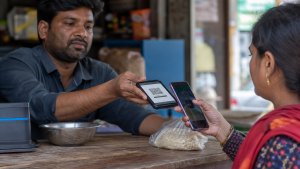
Digital payment systems in India cover the main rails used for cashless transactions, from person-to-person transfers to merchant payments and bulk settlements. They are regulated by the Reserve Bank of India and supported by platforms that make electronic payments faster, interoperable, and widely accessible.
Retail Payment Infrastructure
Retail payment systems are designed for high-volume, low-value transactions used by individuals, shops, and businesses. They support payments through mobile apps, cards, QR codes, biometric devices, and utility payment platforms.
- Unified Payments Interface (UPI): An instant real-time payment system developed by the National Payments Corporation of India (NPCI).
- Single app, multiple accounts: It allows users to transfer money across different bank accounts using one mobile application without entering full bank details each time.
- Virtual Payment Address and QR codes: UPI supports peer-to-peer and peer-to-merchant payments through VPA and QR-based transactions.
- Additional features: It also supports biometric authentication, recurring payments, and mandate-based transactions for investments and other scheduled payments.
- Immediate Payment Service (IMPS): A round-the-clock interbank fund transfer system available through mobile phones, internet banking, and ATMs.
- Instant availability: IMPS works on weekends and public holidays and processes transfers immediately.
- Identifiers used: Transfers can be initiated using mobile numbers and unique codes provided by participating institutions.
- Aadhaar Enabled Payment System (AEPS): Enables basic financial transactions using Aadhaar-linked biometric authentication.
- Micro-ATM use: Banking correspondents use micro-ATM devices to provide cash withdrawal and balance enquiry services, especially in rural areas.
Wholesale and Bulk Fund Transfers
Wholesale payment systems are used for large-value and interbank settlements. They are designed with higher security and are important for financial institutions, corporate transfers, and settlement of obligations.
- Real Time Gross Settlement (RTGS): A system for continuous and real-time settlement of individual high-value transactions.
- Immediate settlement: Payments do not wait for batch processing and are settled during operating hours.
- Threshold: The minimum transfer amount is ₹2 lakh, with no upper limit.
- Primary use: It is used mainly for high-value transfers and interbank settlements.
- National Electronic Funds Transfer (NEFT): A deferred net settlement system where transactions are processed in hourly batches.
- Availability: It works 24×7 throughout the year.
- No amount limit: There is no minimum or maximum limit for transfers through NEFT.
- Common uses: It is used for salary payments, vendor payments, and routine remittances.
Cards, Wallets and Bill Payments
Along with bank-to-bank transfers, digital payments in India also include card networks, prepaid instruments, and interoperable bill payment systems. These channels support retail shopping, online purchases, transit payments, and recurring household bills.
- Debit and credit cards: Plastic cards with magnetic stripe or chip technology used at point-of-sale terminals, online platforms, and ATMs.
- Prepaid Payment Instruments (PPIs): Includes digital wallets, smart cards, and voucher-based instruments loaded with stored value.
- Uses of PPIs: Useful for merchant payments, utility bill settlements, and transit ticketing.
- Bharat Bill Payment System (BBPS): A centralized and interoperable bill payment platform.
- BBPS coverage: Used for electricity, water, gas, telecom, and DTH bill payments.
- RuPay: The domestic card network designed to reduce processing costs and dependence on foreign card networks.
| Instrument | Processing mechanism | Usage domain |
| Debit and credit cards | Magnetic stripe or chip-based cards issued by financial institutions | Point-of-sale terminals, online shopping, cash withdrawals |
| Prepaid Payment Instruments | Digital wallets, smart cards, voucher instruments loaded with funds | Merchant payments, utility bill settlements, transit ticketing |
| Bharat Bill Payment System | Centralized interoperable bill payment platform | Electricity, water, gas, telecom, DTH payments |
Regulatory Framework and Institutional Oversight
The payment ecosystem is governed by statutory and institutional arrangements that ensure security, interoperability, and smooth settlement. The Reserve Bank of India plays the central regulatory role, while NPCI provides the operational backbone for major retail systems.
- Reserve Bank of India (RBI): Regulates and supervises all payment systems in India under the Payment and Settlement Systems Act, 2007.
- RBI functions: It sets operational guidelines, security standards, and transaction fee structures for service providers.
- Interoperability: The RBI establishes norms so that transfers can move across banks and payment wallets seamlessly.
- National Payments Corporation of India (NPCI): An umbrella organization for retail payment and settlement systems in India.
- Promoters: It was promoted by the RBI and the Indian Banks Association.
- NPCI portfolio: Includes RuPay, BBPS, and National Electronic Toll Collection infrastructure.
Key Statutory and System Facts
- UPI launch: Unified Payments Interface was launched in 2016 by NPCI.
- NEFT origin: NEFT was introduced in November 2005 to replace older electronic clearing service models.
- Legal basis: The Payment and Settlement Systems Act, 2007 provided legal recognition and regulation for electronic fund transfer mechanisms.
- RTGS feature: It settles transactions on a real-time gross basis, one transaction at a time.
- AEPS use: It is particularly important for biometric-based transactions in rural banking access points.
- National Electronic Toll Collection (NETC): Uses Radio Frequency Identification technology for automatic toll deduction at highway plazas.
- NETC function: It allows vehicles to pass toll booths without stopping for cash payment.
Key Prelims Takeaways
- UPI is an instant real-time payment system developed by NPCI.
- IMPS enables 24×7 interbank transfers through mobile, internet banking, and ATMs.
- AEPS uses Aadhaar-linked biometric authentication for basic banking transactions.
- RTGS is meant for high-value transfers, with a minimum limit of ₹2 lakh.
- NEFT works 24×7 and has no minimum or maximum transfer limit.
- RBI regulates payment systems under the Payment and Settlement Systems Act, 2007.
- NPCI runs key retail payment rails such as UPI, RuPay, BBPS, and NETC.
| Related | |
|---|---|