Delhi EV Policy 2026 Approved by Delhi Cabinet
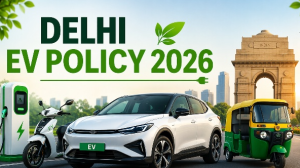
The Delhi Electric Vehicle Policy 2026 was approved by the Delhi Cabinet on 29 June 2026 under Chief Minister Rekha Gupta. The policy will operate from 1 July 2026 to 31 March 2030 and includes an estimated investment of about ₹15,000 crore for electric mobility.
Policy Scope and Vehicle Coverage
The policy applies only to battery-powered vehicles, also called pure electric vehicles or pure EVs. It does not extend incentives to hybrid vehicles. Electric cars with an ex-showroom price of ₹30 lakh or less and registered in Delhi will receive a 100% exemption from road tax and registration fees.
Purchase Incentives and Scrapping Support
The policy provides purchase incentives for several vehicle categories. Electric two-wheelers can receive up to ₹30,000, electric three-wheelers can receive up to ₹50,000, and N1 category electric goods carriers under 3.5 tonnes can receive up to ₹1 lakh. These incentives will reduce annually over three years. Scrapping incentives ranging from ₹5,000 to ₹1 lakh will be available for replacing Delhi-registered BS-IV and below cars with a new electric car. The benefit is limited to the first 100,000 eligible applicants.
Registration Rules and Charging Infrastructure
From 1 January 2027, only electric three-wheelers, including passenger and goods variants, and N1 goods carriers will be eligible for new registration in Delhi. From 1 April 2028, only electric two-wheelers will be eligible for new registration in Delhi. The policy also includes a three-year lock-in period for beneficiaries of government subsidies. Such beneficiaries cannot register their subsidised electric vehicles in other states for three years. More than 30,000 EV charging points are planned across Delhi during the policy period. The policy also provides incentives for charging infrastructure development.
Important Facts for Exams
- Delhi became one of the Indian jurisdictions to set a time-bound transition towards pure electric vehicles in multiple vehicle categories.
- N1 category vehicles are goods carriers with a gross vehicle weight of up to 3.5 tonnes.
- Road tax and registration fee exemptions are common policy tools used by Indian states to promote electric vehicles.
- BS-IV refers to Bharat Stage IV emission norms, which preceded Bharat Stage VI norms in India.
Policy Timeline and Regulatory Milestones
The policy begins on 1 July 2026 and remains valid until 31 March 2030. The registration restrictions for three-wheelers and N1 goods carriers start on 1 January 2027, and the restriction for two-wheelers starts on 1 April 2028.
| Related | |
|---|---|