Delhi Airport Plans India’s First Driverless Air Train
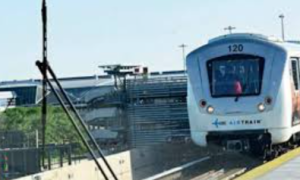
Delhi International Airport Limited is developing an Automated People Mover system, also called an air train, for Indira Gandhi International Airport in Delhi. The planned system is India’s first driverless airport air train and is designed for inter-terminal connectivity across a 7.7 km route.
Automated People Mover System
An Automated People Mover is a driverless, rail-based transport system used for short-distance passenger movement within airports, metro hubs, and large campuses. The Delhi Airport project is planned as an elevated and surface-level system with 5.7 km elevated and 2 km at surface level.
Route and Airport Connectivity
The air train is planned to connect Terminal 1, Terminal 2, Terminal 3, Aerocity, and Cargo City at Indira Gandhi International Airport. The system is intended to serve transit passengers and airport users across the airport complex.
Project Cost and Timeline
The estimated project cost has been placed in the range of about ₹2,000 crore to ₹4,000 crore. The project is expected to become operational by the end of 2027 or in 2028, with some estimates extending completion to 2029.
Important Facts for Exams
- Delhi International Airport Limited operates Indira Gandhi International Airport under a public-private partnership model.
- Automated People Mover systems are used in airports such as Singapore Changi Airport and Hong Kong International Airport.
- Delhi Metro’s first driverless train service began on 28 December 2020 on the Magenta Line.
- The Magenta Line connects Janakpuri West and Botanical Garden in the Delhi Metro network.
Funding and Passenger Use
The project is to be funded by Delhi International Airport Limited through internal accruals. Transit passengers are expected to use the air train free of charge, while non-passengers may be charged a fee.
Airport Service and Environmental Features
The system is planned to improve Airport Service Quality scores and reduce the airport’s carbon footprint. Automated airport transit systems are commonly used to reduce road traffic inside large airport campuses.
| Related | |
|---|---|