China Selects Pakistani Astronauts for Tiangong Mission
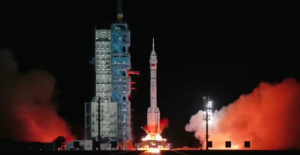
China has selected two Pakistani astronauts as candidates for a future mission to its Tiangong space station, marking a major step in bilateral space cooperation between the two countries. If the mission proceeds successfully, one of them could become the first foreign astronaut to visit China’s space station and the first Pakistani to travel into Earth’s orbit.
The China Manned Space Agency announced that Muhammad Zeeshan Ali and Khurram Daud cleared multiple rounds of selection and will soon travel to China for advanced astronaut training. The development reflects growing strategic cooperation between Beijing and Islamabad in the space sector.
Training for Tiangong Space Station Mission
According to the China Manned Space Agency, both selected candidates will undergo specialised astronaut training in China. After completing all required courses and assessments, one astronaut will be chosen as a payload specialist for a future crewed mission to the Tiangong space station.
A payload specialist is responsible for managing scientific experiments, technology testing, and mission-specific research tasks aboard the space station. This role is critical for international collaboration missions involving scientific exchange.
Historic First for Pakistan
If selected for the final mission, the astronaut would become the first Pakistani national to enter Earth’s orbit. This would be a historic achievement for Pakistan’s space programme and a significant milestone in South Asian participation in human spaceflight.
China described the development as a landmark event and a successful example of the China-Pakistan “all-weather strategic cooperative partnership” taking practical shape in advanced technology and space exploration.
Agreement Signed in 2025
The selection follows a bilateral agreement signed in February 2025 between the China Manned Space Agency and Pakistan’s Space and Upper Atmosphere Research Commission (SUPARCO). The agreement focuses on astronaut selection, training, scientific experiments, and broader cooperation in space missions.
China has also stated that its manned space programme remains open to international participation and welcomes cooperation from other countries in scientific research and technological testing aboard Tiangong.
Important Facts for Exams
- Tiangong is China’s permanently operated modular space station in low Earth orbit.
- SUPARCO stands for Space and Upper Atmosphere Research Commission and is Pakistan’s national space agency.
- A payload specialist focuses mainly on scientific experiments rather than spacecraft operations.
- China became the third country to independently send humans into space after Russia and the United States.
Strategic Importance of Space Cooperation
The mission strengthens China’s role in international human spaceflight and expands Pakistan’s presence in advanced scientific research. It also reflects Beijing’s effort to position Tiangong as a platform for global cooperation beyond Western-led space programmes like the International Space Station.
For Pakistan, participation in a crewed space mission would boost scientific prestige, inspire domestic space research, and deepen technological ties with China in strategic sectors beyond defence and infrastructure.
| Related | |
|---|---|