Canada Invited for European Union Associate Membership
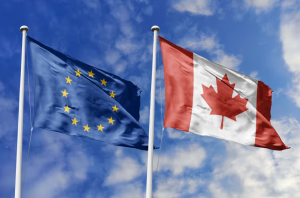
On 16 September 2026, European Commission President Ursula von der Leyen proposed opening the door for Canada to become the European Union’s first “associate member” during her State of the Union speech at the European Parliament in Strasbourg, France. Canadian Prime Minister Mark Carney was present at the address, and Canada and the European Union are scheduled to hold a summit in late October 2026.
European Union and Associate Membership
The European Union is a political and economic union of 27 member states, and its legal framework does not currently contain a formal category called “associate membership”. The term therefore has no settled legal definition in EU treaties, and its possible scope for access to the single market remains undefined.
Canada-EU Relations
Canada and the European Union already share a trade framework through the Comprehensive Economic and Trade Agreement (CETA), which is the EU’s free trade agreement with Canada. Some EU member states have still not ratified CETA, and discussions on the proposed associate status are expected to build on the existing Canada-EU relationship.
Strategic Context and Policy Areas
The proposal comes at a time when Canada is seeking to reduce its economic dependence on the United States amid renewed trade tensions and tariffs imposed by US President Donald Trump. Ursula von der Leyen linked the invitation to shared democratic values and common approaches to artificial intelligence, climate change, and the Ukraine war.
Important Facts for Exams
- The European Parliament is located in Strasbourg, France, and it is one of the main institutions of the European Union.
- The State of the Union speech is delivered annually by the President of the European Commission before the European Parliament.
- The Comprehensive Economic and Trade Agreement, or CETA, is the trade agreement between Canada and the European Union.
- The European Union currently has 27 member states, and no treaty-based category of associate membership exists in its present legal structure.
Key Officials and Timeline
Mark Carney has stated that Canada is not seeking full European Union membership, while Canadian officials, including Ambassador-designate to the EU Jonathan Wilkinson, had discussed the concept with European officials before the speech. The exact legal and institutional implications of the proposal are expected to be clarified in future negotiations.
| Related | |
|---|---|