BRICS Oppose EU Carbon Border Adjustment Mechanism
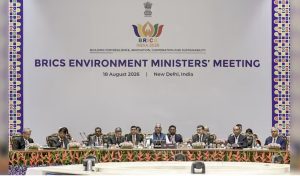
BRICS environment ministers adopted a Joint Ministerial Statement on 18 August 2026 in New Delhi opposing the European Union’s Carbon Border Adjustment Mechanism (CBAM). The statement described CBAM as a unilateral trade measure linked to carbon pricing on imports of carbon-intensive goods.
Carbon Border Adjustment Mechanism
CBAM is a European Union policy that applies to imports of carbon-intensive products such as iron, steel, aluminium, cement, fertilisers and electricity. The mechanism entered its definitive phase on 1 January 2026, and importers must purchase and surrender emission certificates for covered goods.
BRICS Position on Climate Finance
The BRICS statement called for greater climate finance for developing countries and asked wealthy nations to triple adaptation finance by 2035. The ministers also sought grants and concessional finance for climate adaptation, which is a form of funding provided on easier repayment terms than market loans.
Meeting Details and Membership
The 12th BRICS Environment Ministers’ Meeting was held under India’s 2026 BRICS chairship and was led by Union Minister for Environment, Forest and Climate Change Bhupender Yadav. The statement was supported by ministers and senior representatives from Brazil, Russia, India, China, South Africa, the United Arab Emirates, Indonesia, Iran, Saudi Arabia, Egypt and Ethiopia.
Important Facts for Exams
- CBAM is linked to the European Union’s climate policy and covers imports with high embedded carbon emissions.
- Carbon-intensive sectors under CBAM include steel, aluminium, cement, fertilisers and electricity.
- BRICS expanded to include the United Arab Emirates, Indonesia, Iran, Saudi Arabia, Egypt and Ethiopia.
- Adaptation finance is used for climate-resilient infrastructure, disaster preparedness and water security projects.
Trade and Climate Context
A study published in Nature Climate Change in June 2026 found that high-emission Indian steel exporters faced declines in export volumes and revenues to the EU. The BRICS statement also marked the first direct ministerial categorisation of carbon border adjustment mechanisms as a major trade barrier.
| Related | |
|---|---|