ASSOCHAM Holds Electric Mobility Conference in New Delhi
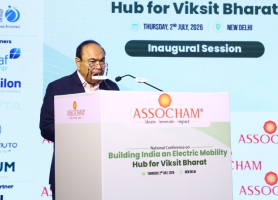
The National Conference on “Electric Mobility: Building India an Electric Mobility Hub for Viksit Bharat” was held in New Delhi on 2 July 2026. Union Minister for Environment, Forest and Climate Change Bhupender Yadav attended the conference as Chief Guest, and the event was convened by the Associated Chambers of Commerce and Industry of India (ASSOCHAM).
Electric Mobility in India
Electric mobility refers to the use of electric vehicles, charging systems, and related energy infrastructure for transport. In India, the sector includes battery electric vehicles, charging stations, battery supply chains, and domestic manufacturing of EV components.
Policy and Industrial Ecosystem
The conference discussed policy continuity, charging infrastructure, localisation of manufacturing, resilient battery supply chains, financing support, and technological innovation. These themes are linked with India’s EV manufacturing ecosystem, which includes original equipment manufacturers, component suppliers, and micro, small and medium enterprises.
ASSOCHAM and Sectoral Councils
ASSOCHAM President Nirmal K. Minda stated that ASSOCHAM would work with ministries through 20 sector-specific councils under its ASSOCHAM 2.0 initiative. ASSOCHAM is one of India’s oldest industry chambers and represents businesses across manufacturing, services, and trade.
Important Facts for Exams
- The Delhi EV Policy 2.0 was mentioned as a possible model for other states in India.
- Viksit Bharat 2047 is a national vision linked with India’s centenary of independence in 2047.
- A circular economy is a system that focuses on reuse, repair, recycling, and resource efficiency.
- MSMEs stand for micro, small and medium enterprises, which form a major part of India’s industrial base.
Environmental and Governance Themes
Bhupender Yadav referred to green growth, resilient infrastructure, transparent governance, and a circular economy in the context of electric mobility. These terms are used in environmental policy, industrial planning, and sustainable transport frameworks in India.
Electric Vehicle Manufacturing
Electric vehicle manufacturing covers vehicle assembly, battery production, power electronics, and charging equipment. Localisation of manufacturing is a policy approach that increases domestic production of parts and reduces dependence on imports.
| Related | |
|---|---|