ASML Begins India Operations
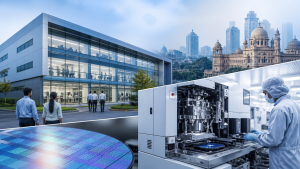
ASML began operations in India in September 2026 and established a legal entity in the country. The company is also setting up a customer support office in India and plans to hire 20 to 30 young engineering graduates in the initial phase.
ASML and Semiconductor Manufacturing
ASML is a Dutch company known for lithography systems used in semiconductor manufacturing. Lithography tools are used to transfer circuit patterns onto silicon wafers during chip fabrication. ASML supplies advanced lithography tools and related solutions for semiconductor fabs.
Tata Electronics Partnership in Gujarat
ASML and Tata Electronics signed a strategic partnership in May 2026 for the establishment and ramp-up of Tata Electronics’ 300 mm semiconductor fabrication facility in Dholera, Gujarat. The fab involves an investment of $11 billion and is planned to produce 50,000 wafers per month. The facility is scheduled to begin operations in 2028 and will serve automotive, mobile devices, and artificial intelligence applications.
India’s Semiconductor Policy Framework
India has announced the Semicon 2.0 scheme with an incentive outlay of around ₹1.27 lakh crore, or 13.5 billion, for building the semiconductor ecosystem. Investment proposals worth 12 billion are expected under the scheme. The policy framework includes support for fabrication units, supply-chain development, and related semiconductor infrastructure.
Important Facts for Exams
- ASML is headquartered in the Netherlands and is a major supplier of semiconductor lithography systems.
- 300 mm wafers are widely used in modern semiconductor fabrication plants.
- Dholera is a planned industrial city in Gujarat and a site for semiconductor manufacturing projects.
- Semiconductor fabs are capital-intensive facilities that manufacture integrated circuits on silicon wafers.
India’s Demand and Capacity Targets
ASML Chief Strategic Sourcing and Procurement Officer Allan Wayne stated in September 2026 that India aims to meet 15 to 25 per cent of local semiconductor demand by 2032. Achieving this target requires multiple semiconductor fabrication plants and supporting industrial capacity.
| Related | |
|---|---|