ASI begins conservation work at Nur Jahan’s sarai in Agra
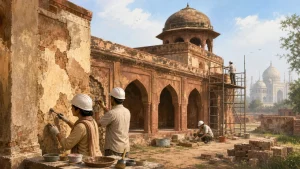
The Archaeological Survey of India has begun conservation work at Nur Jahan’s Sarai near Ram Bagh in Agra. The project has an initial budget of Rs 60 lakh and follows three-dimensional mapping of the site.
The work includes repairing walls with kakaiya bricks and constructing a roof and corridor. The sarai dates to the Mughal period and is associated with Nur Jahan. Its first conservation phase is expected to be completed by February–March.
The ASI spent Rs 30 lakh on structural repairs to the sarai and its gateway in 2022.
Notable Points
- Nur Jahan’s sarai patronage: A Dutch traveller recorded Nur Jahan’s patronage of sarais, gardens and palaces. In 1620, she commissioned a large sarai in Jalandhar district, about 25 miles southeast of Sultanpur.
- Caravanserai history and design in the subcontinent: Caravanserais stood along the historic Grand Trunk Road. The earliest clear documentary mention is of one commissioned by Delhi Sultan Muhammad ibn Tughluq between Delhi and Daulatabad. Indian subcontinent caravanserais adapted Iranian designs to local needs and usually had symmetrical plans with two main gateways.
- Caravanserai revenues and waqf: In parts of the Muslim world, revenues from urban caravanserais supported charitable or religious functions through waqf endowments. These arrangements gave specified buildings and revenues protected endowment status under Islamic law.
Originally written on
November 18, 2026
and last modified on
November 18, 2026.
| Related | |
|---|---|