Ancient coins from Chhattisgarh bear elephant, peacock and goddess motifs
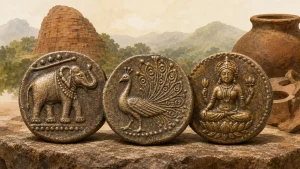
Coins found in Malhar are considered the oldest known coins from ancient Dakshina Kosala, the historical name for the region now known as Chhattisgarh. One such coin, dated to the first century BCE, bears an elephant on one side and the marking “Ora” on the other.
Coins from the first century CE include lead pieces with a tree and an elephant. Copper coins bear a peacock and the Brahmi letter “Ma”. Coins showing elephants and goddesses date to the third and fourth centuries.
Coins attributed to Sharabhapuriya rulers Karmaditya, Mahendraditya and Prasannamatra date to the fifth and sixth centuries. Later Kalachuri coins were made of gold and copper. Coins from the reign of Mughal emperor Akbar included round and square forms.
Notable Points
- Sharabhapuriya coinage: Prasanna, also known as Prasannamatra, is the only Sharabhapuriya ruler known from coin evidence in the supplied material. His gold coins show a standing Garuda with a crescent moon, wheel and conch shell. Coins associated with him have been found at Sirpur, Kalahandi and Chanda.
- Malhar’s archaeological sequence: Excavation at Malhar identifies five broad periods, from the protohistoric period (c. 1000–350 BCE) through the Kalachuri period (c. 900–1300 CE). The intervening phases include Maurya, Shunga and Satavahana; Sharabhapuriya and Somavamshi; and later Somavamshi periods.
Originally written on
November 18, 2026
and last modified on
November 18, 2026.
| Related | |
|---|---|